

Cover crops, mowing, targeted interventions, and grazing can help regenerate even steep or neglected land
As much as I like to build soil function with a corn and cereal rye combination, some fields don’t warrant this approach, given their steep slopes and irregular shapes and sizes. For these areas, I have had good results from multi-year mowing and, in some areas, grazing cover crops.
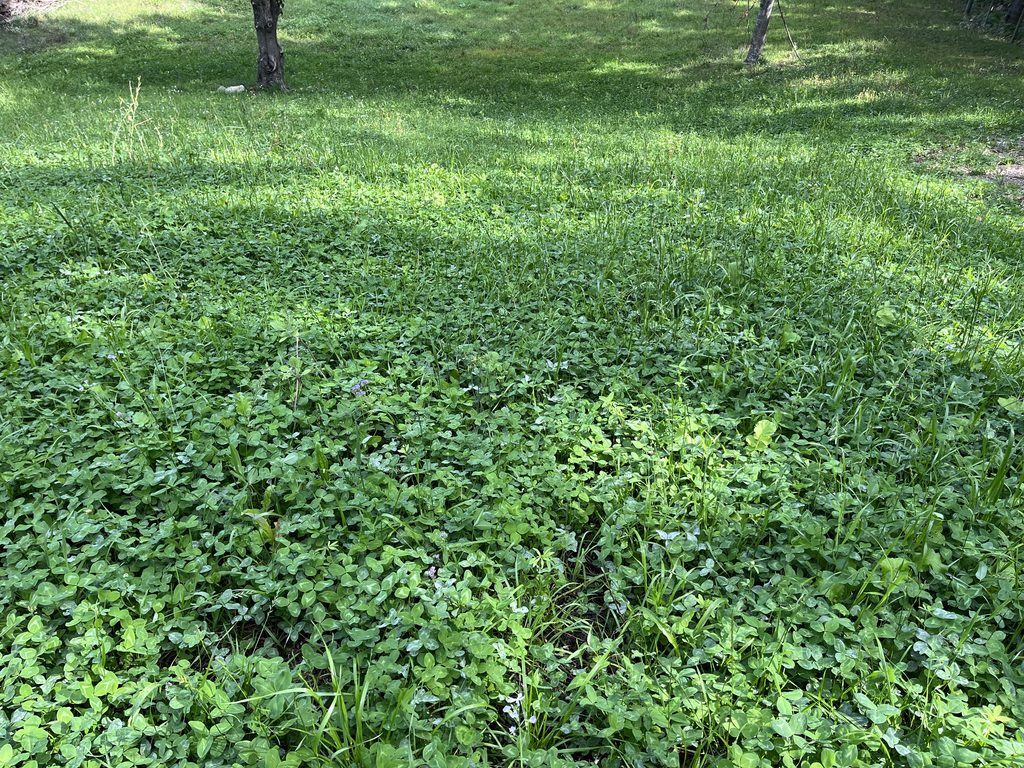
Multispecies cover crop blends are a great example of synergistic benefits outweighing the combined individual effects. A typical blend will contain nitrogen fixers like legumes and sunn hemp, nitrogen sequesterers such as ryegrass, deep-rooted mineral miners like brassicas, highly acidic root mineral solubilizers like oats and buckwheat, and maximum-photosynthesizing, root-exudating, and biomass-building crops like sorghum sudangrass.
This system of plants works synergistically to build and enhance relationships with a whole other synergistic system at (and in) their very root tips. The fact that tens of thousands of species of protozoa, amoeba, ciliates, bacillus, mycorrhizal fungi, and nematodes — to name just a few — all work together within the soil microbiome community is almost beyond comprehension.
Once most of the cover crop species have reached a sufficient level of maturity, I mechanically shred them — or graze them, if it’s an area destined to become pasture. Most years I can mow two to three times, creating quite a bit of residue and, most importantly, new root growth. The legumes and the annual ryegrass will survive for a couple of years, providing a base to which I can interseed other species if necessary.
Why is timely mowing or grazing so productive in building soil? It’s all about the sun and our management practices to optimize photosynthetic capture by the plant. This is achieved by keeping the plant in a dynamic state for as many days as temperature and sun allow for the photosynthetic process to take place. While we cannot control the weather, we can manipulate the lifecycle of the plant simply by mowing or controlled grazing with the goal of preventing the plant from entering the reproductive stage. At this stage, the plant’s focus shifts from capturing and storing carbon to diverting this energy to the developing seed heads. As the seed heads develop, the plant is basically raiding the pantry to pack lunches for each of the many individual seeds, providing the seed with food or an energy source for that critical period between germination and photosynthesis.
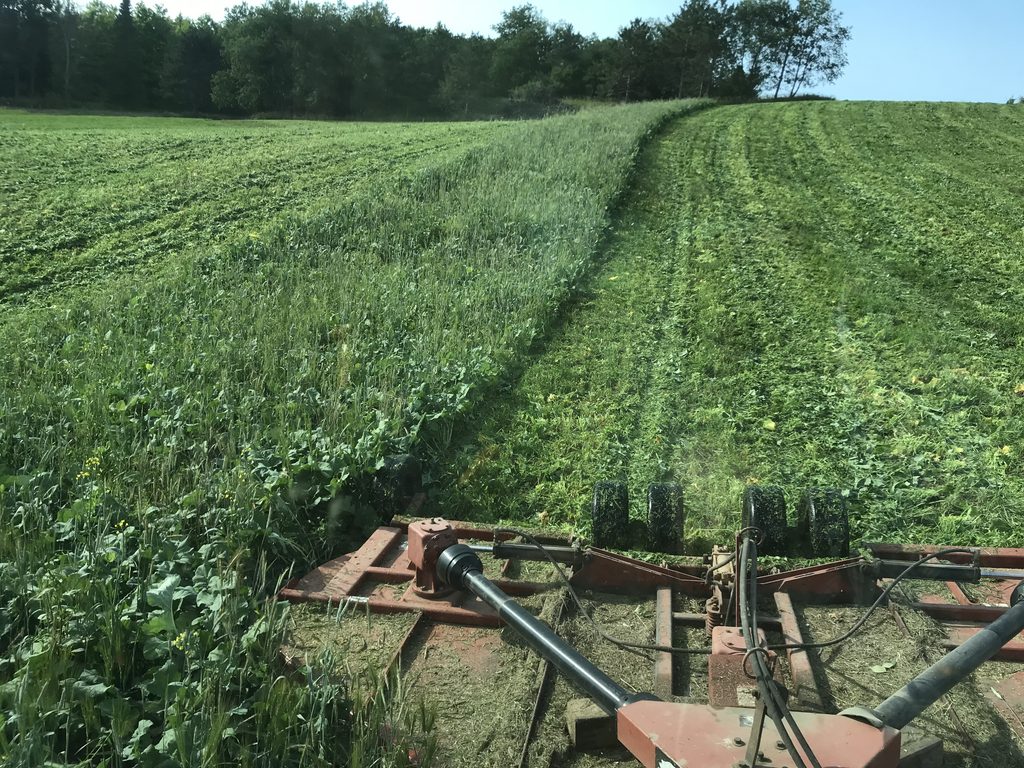
While this is much more productive than continually tilling and replanting, it is also useful in providing a bellwether effect — a leading visual indicator of which parts within a field are deficient in organic matter, nutrients, etc. I can then address these areas accordingly. This is a real-time visual way of grid sampling. It is especially helpful on newly acquired ground before investing in an expensive crop such as alfalfa.
Moving Earth
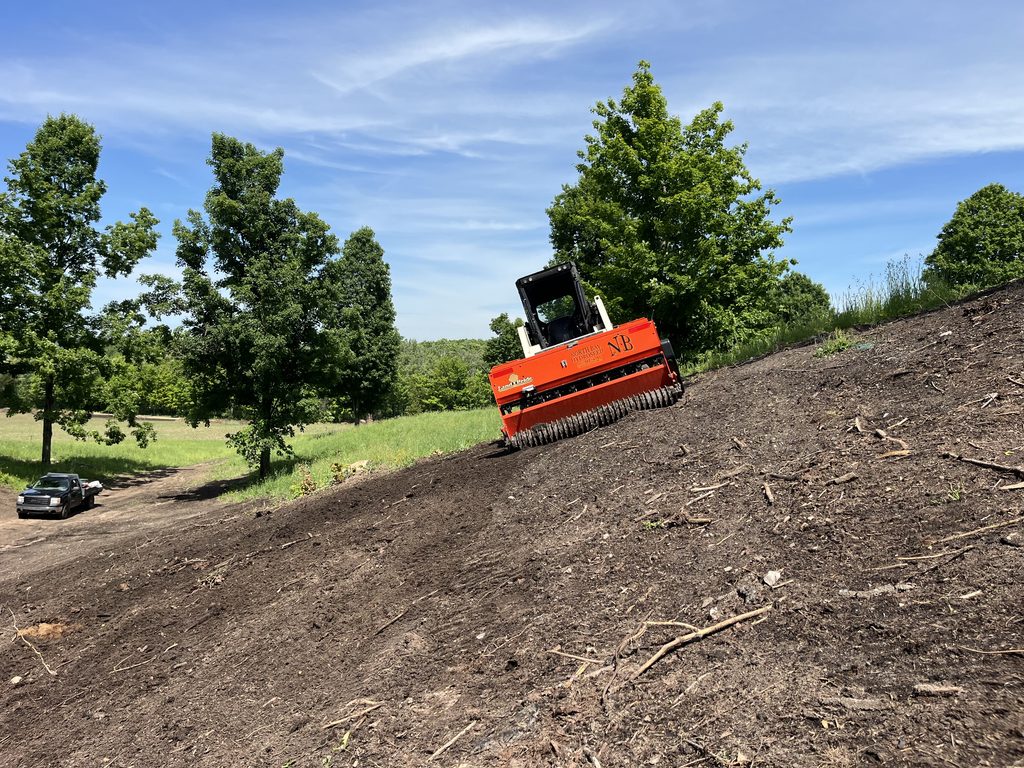
The glacially formed topography here in northern Michigan means we have 240 feet of elevation difference just on our farm. Drainage is seldom an issue, but we do face the challenge of needing to rebuild soils that have been degraded by years of erosion. Early farming practices on these fields were not conducive to sustainably farming this type of terrain. This has required us to literally reverse gravity by physically relocating topsoil at times. We have covered bare hillsides with thousands and thousands of yards of topsoil from valleys, fencerows, field edges, farm lanes, cattle dry lots, and anything that resembles topsoil, including gumbo clays and marls from local construction sites. While this requires quite an initial amount of work, it is absolutely amazing what these hillsides will grow when given a chance with just a minimal layer of soil to provide an environment for establishing a new biological community.
This not only utilizes previously idle land but also takes away opportunities for invasive weeds and brush to re-establish themselves within field boundaries, as well as providing a larger, easier-to-navigate field for modern equipment. Because of the more recent changes in our local climate, we now have opportunities to perform this type of work in the offseason that didn’t exist before, when we had long, harsh winters and deep snow.
This might be an extreme form of regenerating soil — and, admittedly, in some cases, borderline crazy from an economic standpoint — but these regenerative soil-building efforts on multiple farms have been by far the most satisfying and financially rewarding activity of my farming career.
Driving the local roads, the beauty of these transformed fields is quite evident. Whether it’s the lush field of dark green alfalfa or a herd of happy Holsteins grazing on a lush pasture hillside, these fields that were nearly desertified surely stand out. Even the average person today, long removed from agriculture, can appreciate a healthy-looking field when they see it given its dark green hue.

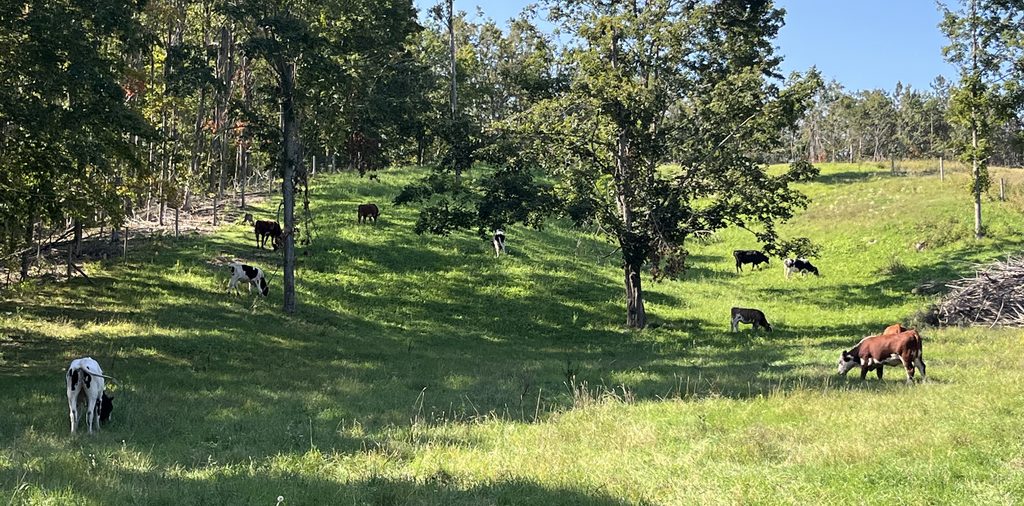
Because of our success in restoring these degraded landscapes, I have had to turn down requests from various landowners to farm their land. Granted, there is not a lot of competition for land in our area, and therefore rent is very low — which allows for investing in regenerative soil-building practices. Fortunately, I have had the right landowners over the last thirty-plus years, allowing me to recoup my initial investment many times over.
Weed Suppression and Timing
On the most neglected pasture acres, weed suppression is an important part of the restoration sequence, but it remains subordinate to the larger biological system. Having an active biological community will also help mitigate the negative effects of minimal herbicide use through microbial metabolization of the chemical residue. I generally apply a liquid carbon source (QLF Boost) with the herbicide to increase the efficacy, minimize drift, and provide a biological food source for the latent existing grasses.
The other important management tool available in my context is rotation. I am not going to lose sleep over having a perfect weed-free field or the development of any herbicide-resistant weeds, as the establishment and management of a perennial crop of hay will negate the weeds’ existence here.
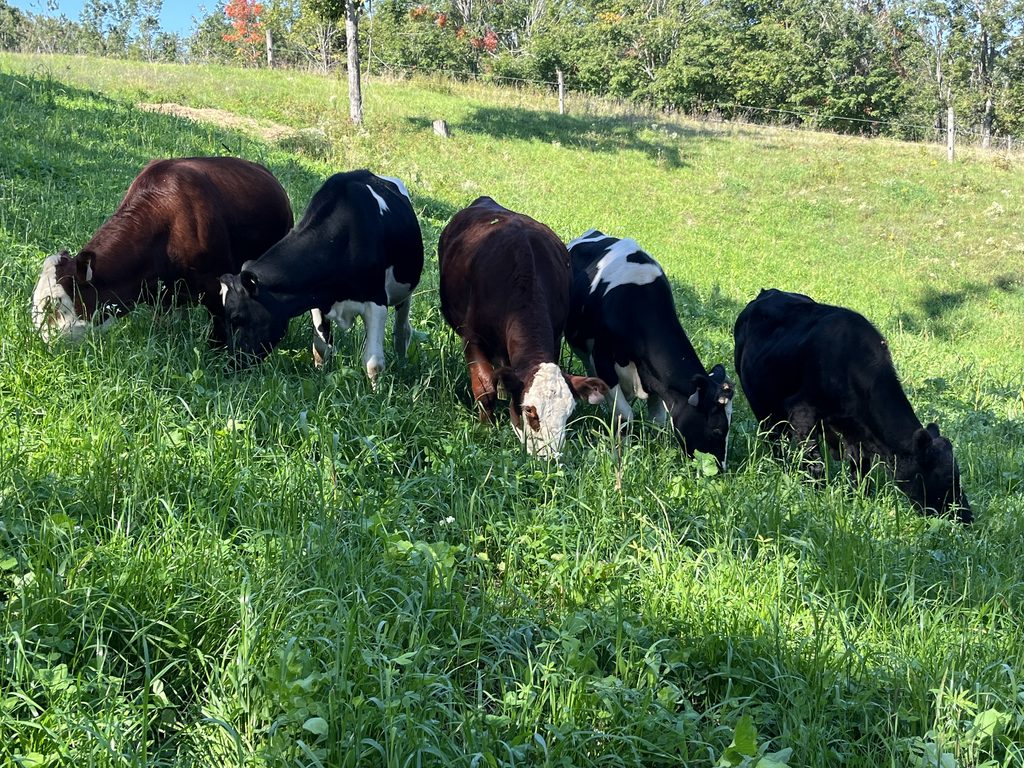
For regenerated land going into pasture, I am also not too worried about some weeds — to a point. While having a mix of different weeds can provide diversity and dietary options for the livestock, be aware of the plants whose negative effects far outweigh their positives. This can be a very limiting factor in forage quality and quantity.
Prime examples of these in our overall area are noxious and invasive plants like Spotted Knapweed, Buckhorn, and Hoary alyssum, which is toxic to horses. The Spotted Knapweed is particularly a problem in regenerating soil due to its very strong allelopathic effects. It severely decreases biological and plant diversity, both of which are so important in building healthy soils and productive pastures. Not only do these plants negatively affect forage production potential, but their photosynthesizing abilities might be very limited given their characteristically small leaf size compared to their woody stems.
For land where tillage is an option, I can overcome these noxious weeds with intensive cover cropping and the incorporation of various nutrients, creating a healthy environment to establish a permanent forage crop. When properly managed, these practices will keep these intruders at bay and will prevent them from reestablishing within field borders.
Our successes in regenerating acres of cropland have led me to see the potential of our forgotten and neglected hillside lands. For these areas with very limited vegetative cover and steep terrain, tillage is the last thing I want to do. After removing the unwanted overgrowth of trees and brush — particularly red pine and invasive types such as autumn olive and white pine, which are detrimental to soil life — I typically mow down the remaining smaller brush and weeds. After there is sufficient vegetative-stage regrowth, I do a one-time application of a pasture herbicide such as Forefront, mixed with QLF Boost. While this herbicide alone would not permanently eliminate the well-established weeds, it will sufficiently suppress them to the point where the existing native grasses or inter-seeded forages will quickly gain the upper hand — if done in conjunction with addressing the nutrient and mineral deficiencies.
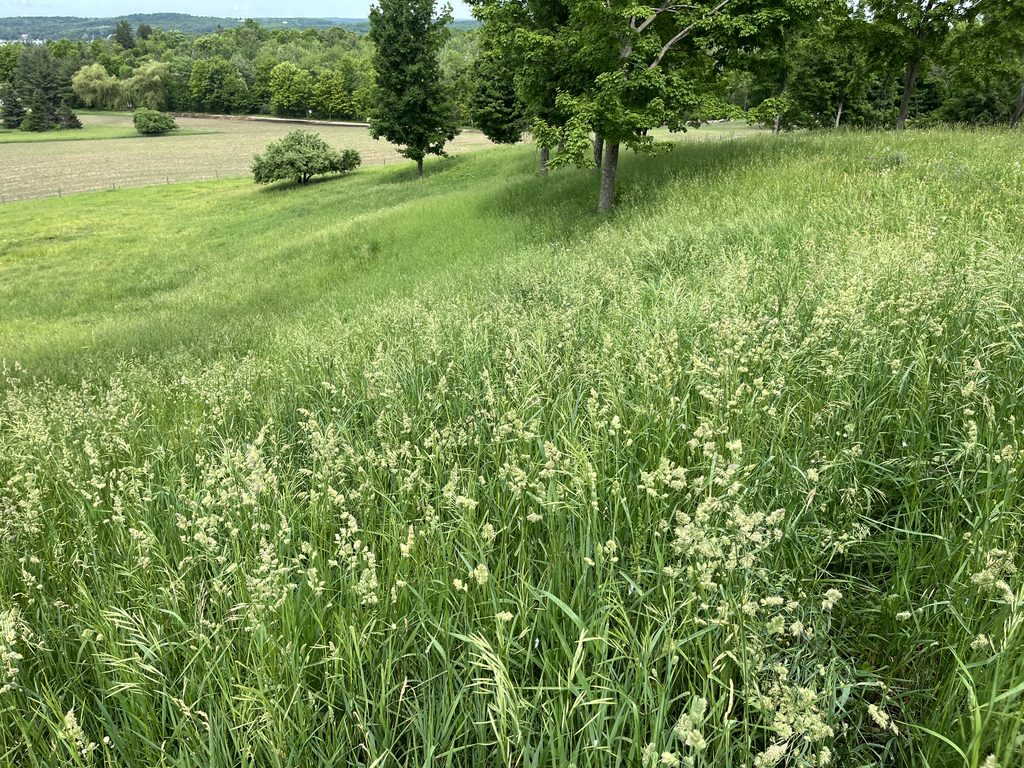
Mowing and/or grazing with added fertility is thus effective in creating a productive pasture on formerly severely degraded hillsides. However, when I have tried this method without the herbicide application, the weeds unfortunately thrive and don’t allow the suppressed grasses to flourish. Just as on cropland, it is important that the added fertility contain some form of manure or a manure-based compost to introduce and promote an active bacterial community. This is yet another very observable example of where any negative herbicide effects can quickly be offset by the many positive effects of a healthy, photosynthesizing, soil-building, carbon-sequestering, perennial grass sod.
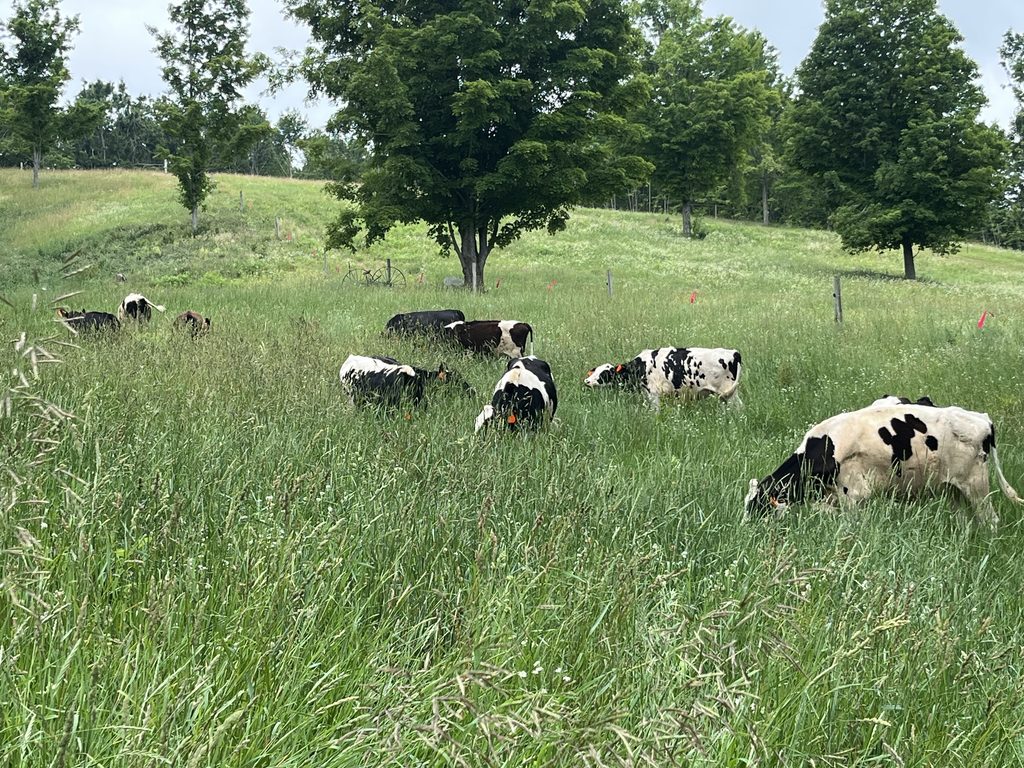
It has been very rewarding to see how degraded land can be turned into productive and beautiful cropland — but maybe not as impressive as seeing what can be done in re-establishing these grass hillsides. With adequate moisture in June of 2024, the pre-existing but latent stand of orchardgrass on our hillsides thrived, producing more forage than the cattle could graze in a timely manner. This led to a fully mature seed-producing stand that, when trampled, provided a thick thatch to cover the newly emerging seeds. It was a beautifully functioning regenerative system, aided by the benefits of the grazing cattle.
I would love to farm with no chemicals or other inputs, but I have to realistically recognize the context of my soils and do the best I can to biologically improve them as sustainably as possible for the remaining time I have to farm.