

After four decades of organic farming and work with ancient wheat, Bob Quinn argues that agriculture should put soil health, nutrition, research, and rural prosperity ahead of yield alone
Acres U.S.A. How’s the weather treating you in Montana this year? Anything challenging or different with this growing season than normal?
Bob Quinn. We don’t have normal anymore. Abnormal is the new normal. I don’t call it climate change; I call it climate chaos, because that’s what I see. We see extreme switches from hot to cold, wet to dry, windy to still, and this year is no different. We had about nine months of drought. We had no winter. It was extremely warm. We had two weeks of winter right after Thanksgiving with some snow, and then by Christmas it looked like fall, and by Easter it looked like spring and we just skipped winter. We didn’t have any precipitation per se.
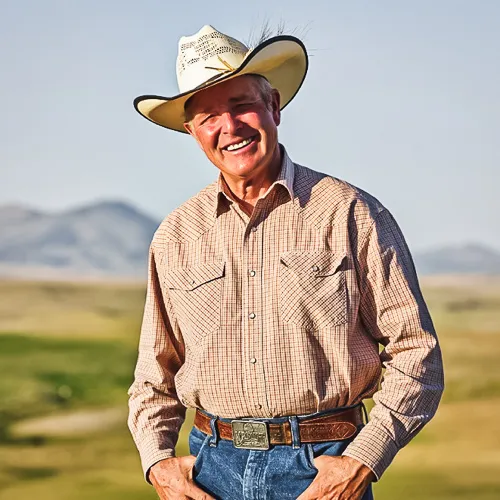
Then the last weekend in May it started raining, and it continued to rain all through June. We got almost nine inches. That’s three quarters of our annual precipitation in one month. And it just completely turned everything around. Everything was seeded. There were some real small showers — enough to get some moisture in the top inch or two to seed our spring crops. We didn’t have much hope for them, but they look gorgeous now. We’re hoping and praying to avoid hail storms until harvest. But harvest has a very big prospect — which is a surprise compared to what it was a month ago.
Acres U.S.A. What is your memory of, say, 20 years ago, weather-wise?
Quinn. When I was growing up, my grandfather told me that we normally had an 11-year cycle — the sunspot cycle is what he connected it to. And during those 11 years, we’d have one or two years of really good crops with way above average rain, we would have one or two years of drought with grasshoppers and almost no crops, and then the other four or five years in between would be sort of average. It just went in a cycle.
That probably lasted up through maybe the ’70s or ’80s. And then in the beginning of the ’90s, we skipped our rain cycle. We had two droughts in a row. And since then, it’s just been chaotic. There’s no more cycle, really.
We often see heavy rain years followed by a drought, and vice versa — just one extreme to another from one year to another, and even in the middle of the year. Our normal rain comes in May and June, and in July it dries up. The first half of August is usually hot and dry, which is perfect for small-grain production. But last year we had rain all through July and the first half of August. And then when it was supposed to cool down and rain in the fall, it heated up and quit raining. So we had no rain to plant our winter wheat in. It was really ratty looking.
Acres U.S.A. Are you on the land that you grew up on?
Quinn. Yes. My grandfather started our farm as a wheat and cattle ranch in about 1920. My great-grandfather came here the year before, and my grandfather married his daughter.
My grandfather was diversified right from the beginning. He had cattle and grain. That’s a lesson I learned early and promote as much as I can — the more we can mimic nature and be diversified and avoid monoculture, the more chance we have for success. That’s how my family’s operation really started. My dad was raised here and took over the farm after my grandfather, and then I came back to the farm in ’78 and raised my family here.
Acres U.S.A. Did your dad maintain that diversity mindset, or did you guys move more into a conventional-type monoculture when you were growing up?
Quinn. It was monoculture field by field, but he was always trying new things. He was trying new crops. He would continue his crop if there was enough moisture. He wasn’t a follow-a-book type of guy — he was “follow nature and see what that was giving us, and then take the opportunities as they came.” If there was the opportunity to grow a crop two years in a row, that was unusual, but he would do it. He didn’t care that the tradition was to only grow a crop every other year.
He was also the first to adopt herbicides — which, when they first came out, were just accepted like a miracle drug because weeds were such a problem by that time.
Acres U.S.A. It would’ve been difficult to say no to something like that when they first came out.
Quinn. The weeds were so bad back then. They would have to get a broom and have somebody right on the front of the combine header — the most dangerous thing you can imagine — and punch the weeds into the header while somebody else was driving. They were not rotating their crops to help mediate the weeds, so it was just getting worse and worse. The summer fallow did help somewhat, but it wasn’t a cure. So the herbicides were just like magic.
My dad was also one of the first to try chemical fertilizers. By that time, in the early ’50s, we’d probably only grown 15 crops — one crop every other year for 30 years. But the nutrition in the prairie soils was already starting to decline. Even though we didn’t see it in every field in the beginning, by the early ’60s almost everybody had adopted chemical fertilizers because their soils were completely worn out nutritionally, and they weren’t building them up in any other way. So that also became the way everybody farmed.
That was the way I was taught in high school and in college. When I came back to the farm, I didn’t intend to change anything. I thought everything was fine the way it was. The only thing that wasn’t fine was that our farm wasn’t big enough to support two families. We had 2,400 acres — 1,200 acres in grass with about 50 head of cattle in the cow-calf operation and 1,200 acres in crop ground, with 600 acres seeded every year.
So we started into alternatives, and that’s what sent me down all these different roads and opened up all these different vistas for me. It was a financial need.
Acres U.S.A. Where did you start learning how to do what you’re doing now?
Quinn. Well, I had studied plant biochemistry in graduate school at UC Davis, and I started selling my wheat to bakers in Southern California. They bought from us for a couple years and then they quit buying, and we never knew why, but I thought it was still a good idea.
I was interested in our high protein. We have higher protein wheat than most in the country, so the quality is really good for bread. If you’re making whole wheat bread, that’s even more important than with white flour. And my cousin found somebody that started right off the bat taking a truckload a week, and he was paying a dollar a bushel premium over the $3 we were getting in the marketplace at that time. That’s a one-third increase right off the bat. That turned the whole financial picture of our farm around. We were having a hard time being solvent year by year and had been starting to go backwards a little bit.
Things went really well the first year, and then the second year he asked me if we could find any organic grain. I didn’t know anything about organic. I didn’t even believe in organic! I’d heard about it when I was in California, but I thought it was a bunch of smoke and mirrors and hooey.
But I didn’t want to discourage my best customer, so I said, “Sure, we’ll find some wheat for you.” So I went looking, and in Montana in 1984 there were just a handful of organic farmers. I finally found them, though, and after the first load I sent, he loved it and wanted more. Pretty soon I was working with every organic farmer in Montana, and they invited me to join their group and come to their winter meetings and hear what they had to say.
And I was enamored. They talked about how they could walk over their fields and feel a difference in the tilth beneath their feet, just walking on it. They told me how they were growing their own fertilizer using legumes in their off season, instead of summer fallowing. They would terminate them just by disking or cultivating. No one was plowing anymore by that time. The alfalfa or clovers they were growing would go into the soil and the nitrogen they were fixing would provide the nitrogen for the next crops. Their grain crops gave very good protein as well. They told me about how they did rotations, which broke up weed cycles and disease cycles. I was really interested in that.
After a year or so — it was actually 40 years ago — we started our first organic experiment on our farm with 20 acres, and it was a terrific success.
Acres U.S.A. What did you have to do to change your methods to make that work? And how out of your comfort zone was that?
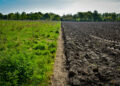
Quinn. I’m a scientist at heart, so nothing is really very far out of my comfort zone. I like to try new things. My dad was always trying new things. The first experiment was 20 acres out of 1,200 — that’s nothing. So it wasn’t a big risk. That 20 acres had been in alfalfa for three years, so there weren’t any weeds in it. It had built the nutrition of the soil up to a full load of nitrogen. We had to add about 90 pounds of nitrogen to the strip right next to it, for comparison, to bring it up to the same level.
And when we harvested, the yields were almost identical — within a bushel — and the proteins were also within just a couple tenths of a point. After that I said, “Dad, let’s do half the farm organic next year,” and he said, “Whoa, whoa — we don’t have any idea what we’re doing. How about 10 percent?” I said, “How about 25?” He says, “15.”
So we started, and that was a drought year. Grasshoppers came in, and I asked my organic friends, “What do you do with grasshoppers?” And they told me about a product called Nosema locustae. It’s a protozoan, and you put it on wheat bran and spread it around the edge of your field, and you have to get it out before the grasshoppers actually attack your field. They usually start in the grass, in the pastures around us, and when that starts to dry, then they’ll come into our wheat fields.
I did that, and it completely works. The protozoa make the grasshoppers sick and kill them. Then their friends come and eat them. It’s just like politics in America today!
But within a few weeks, the grasshoppers were gone. At harvest time there were almost no grasshoppers in the combine when we harvested that field. Meanwhile, across the creek with our chemical field, we sprayed it with malathion, which was a traditional insecticide in those days. That killed everything in just a few hours. But within 10 days or so, the malathion was dissipated and another batch of grasshoppers came in. We couldn’t afford to spray twice because it was already a poor crop. And when we combined that field, there were almost as many grasshoppers in the combine tank as there was wheat.
After that I was done with chemicals. I told myself I was going to make organic work. And that’s what we did. It wasn’t always easy, but it was always possible. It was a pretty tough learning curve, but we didn’t have any disasters. It turned our whole farm around economically. We were reducing our inputs by two thirds and increasing the value of what we sold by two or three times.
Within three years, when we were completely organic and certified, we no longer had an operating note. We didn’t need an operating note anymore because we didn’t need any big loans at the beginning of the year for all the chemicals and all the seed and everything, hoping we could pay it all off at harvest time. We reduced to a very minimal amount of inputs and were selling throughout the whole year, so we had income through the whole year.
It really started out as a financial conversion, but to me, it became a philosophical and biological conversion. I was completely converted to the whole program of diversity and mimicking nature. That’s what really sold me, and that’s what’s kept me going.
Acres U.S.A. So you moved away from the fallow years during that time period; what were you planting in those off years?
Quinn. It took me several years to figure out that I should rotate my green manure cover crops just like I rotate my cash crops. At first we were doing all alfalfa; then people told us that sweet clover was better, so we did all sweet clover, and beetles came in on that. Then we did all peas, and then that didn’t do too well. So I went back to a rotation. Now we rotate our cover crops every other year. We’re planting alfalfa that’s underseeded the year before as a nurse crop in the cash crop. That’s a multi-year crop. And now we’re adding sainfoin and Kernza to that so that it can be grazed the second and third year and then worked the end of the third year, and we start into our cycle again of cash crops.
Or we do a two-year cover crop of sweet clover and yellow-blossom sweet clover — which, if you have good moisture, will grow up six or seven feet tall. When you disk that in, when it’s in full bloom, it leaves about four or five inches of mulch on top of the ground. You don’t have to touch it the whole rest of the year. It completely mulches the ground; no weeds come up, and it keeps the moisture in. It’s my favorite if it works right.
Then for some fields we’re doing just one year of annual cover crop. We’re experimenting with different cocktails of broad leaves, of narrow leaves, and of pulses. We’re trying to incorporate grazing into that too. We have a couple experiments where we’re going to be measuring the difference between grazing and non-grazing on the annuals and on the perennial ones — haying and grazing, and just working it all down without grazing.
Acres U.S.A. That was going to be my next question — how you incorporate livestock.
Quinn. I’m not sure I would turn livestock into a solid field of sweet clover, but I’m thinking about introducing Kernza with the sweet clover too, so that could be a polyculture. We haven’t done that before, but I’m thinking about that starting next year.
I don’t have cattle anymore since I started traveling to food shows. The cows went down the road, and we lease out our pastures to neighbors. But now that we have started the Regenerative Organic Research Education and Health Institute, we’re re-introducing the cows. We’re working with neighbors that have collars on their cows; we can use satellite now to control where the herd is so we can do mob grazing. They imitate the way the buffalo grazed. I’m really excited about incorporating that new aspect into our whole system.
Acres U.S.A. How surprised are you about cattle prices, compared to when you had them?
Quinn. Yeah, there’s no comparison. But whatever goes up is going to come down. I hope ranchers are saving some of their money. My dad always used to say that there was importance in diversity. With half the farm being crops and half being cattle, normally they balance each other — when one was up, the other was down. That worked pretty well with small grains and beef. That really helped us be more consistent with our overall income.
Acres U.S.A. When did you start putting together the food-as-medicine piece? When did you start connecting the dots with that and start using ancient grains to really change your program?
Quinn. That’s a story that goes right along with our conversion to organic. Forty years ago this year we planted our first half-acre of an ancient wheat that we ended up selling under a trademark we registered called Kamut. It’s an ancient khorasan wheat that’s a very close relative of durum. We found out that about 85 percent of people who could not eat modern wheat could eat this with no trouble.
As I mentioned earlier, I have a Ph.D. in plant biochemistry, and that’s what I love really, so I was determined to try to understand why people could not eat modern wheat but could eat ancient wheat. We started to do all kinds of analysis, and I couldn’t find anybody in America who would help me with clinical trials and research. This was the early ’90s, and most of the thinking in those days was that there was nothing wrong with our wheat. If people were having trouble eating it, it was all in their head. One scientist told me, “If I would do what you’re asking me to do, I’d be wasting my time and your money.”
So I ended up in Italy, where wheat is very important. If people there had a problem eating wheat, they didn’t go down the street and buy gluten-free — that didn’t exist anyway at that time. But they wanted to know what the trouble is. We put together a team at the University of Bologna and with the university research hospital in Florence, and we started doing clinical trials.
We started with a mouse trial, and we found that Kamut was anti-inflammatory. No one had ever reported any type of wheat being anti-inflammatory. But inflammation is directly linked to chronic disease. So we immediately shifted our research to chronic diseases. We started with heart disease and went to diabetes, irritable bowel syndrome, fibromyalgia — all these chronic diseases that affect so many people. We did clinical studies of human volunteers who had these diseases in early stages, and we compared diets with modern wheat versus ancient wheat. We found huge differences — eating the modern wheat, in many cases, aggravated the problems compared to ancient wheat.
That got me thinking in a whole new way about the food that we grow. It’s not only how you grow it — it’s the seed you start with. Wheat is a perfect example — for so many decades now, we have manipulated our seeds, focusing only on yield. But we have seen a loss of nutrition. With wheat, something else has been introduced — 12 to 20 percent of Americans now have trouble eating wheat. That’s huge. Something is going on.
We’ve found that by changing a few things, that problem went away. And if that’s true with wheat, I wonder about the rest of the stuff we eat. That really opened the door to the food-as-medicine idea.
Acres U.S.A. What are the characteristics of the ancient wheat versus what it’s morphed into now?
Quinn. Well, that’s really hard to pinpoint. We don’t really know the mode of action. We just know that the modern wheat has been changed in a significant way such that many people can no longer tolerate it. It’s not just the chemicals — that’s a factor, but we don’t need to get into that. All of our studies were done with organically grown ancient wheat and organically grown modern wheat. Studies coming out of Canada have shown that glyphosate on wheat, for example, can give you very similar dietary or intestinal trouble as wheat intolerance. We didn’t want to get into that, so all of our research was comparing organic versus organic. But we still saw significant differences.
A couple of our studies were looking at RNA production. There are things in the wheat that are actually stimulating DNA and what proteins are made in the body as a response to these secondary compounds — compounds in minute concentrations that have a very big effect on the body when they start to turn off or on certain genes and make different types of proteins. We were seeing proteins that were associated with anti-inflammatory properties. Certain genes had been turned on and told to make them. It was being stimulated somehow by something in this grain. It’s a really big mystery that deserves a lot of research. Because once we start to understand it, if we could use those methods and breeding programs to avoid the bad stuff and avoid taking out the good stuff, it would really help breeding programs in the future for food.
But in the meantime, we are focusing on going back to landraces, to ancient grains — to varieties that haven’t been changed much by breeding — and focusing on achieving higher yields. We’re focusing now on nutrition and special attributes that these grains have, but those come with disadvantages. They might be too tall, or they might be more susceptible to disease. But before we do any crossing to try to solve those problems, we want to understand what we’re looking for that we want to preserve.
Acres U.S.A. You always hear people talk about going to Italy and eating pasta and not feeling sick. No one’s getting out of a bowl of pasta in America without feeling a bit run down afterwards. Are they all eating these ancient grains?
Quinn. They’re starting with a seed that’s more traditional, that hasn’t been changed as much. It’s the same thing in Germany with bread. They’re eating whole-grain breads more than we are. They’re using older varieties that haven’t been bred nearly as extensively as ours have just for increasing yield.
Acres U.S.A. What is the yield difference? And what is it going to take for wide-range adoption of this?
Quinn. Well, it takes a good return for the farmers. I think that farmers should be paid like pharmacists or medical doctors, if they grow grain that heals. If we grow grain or any other food that actually heals people, then why can’t we be paid like the pill companies? Not that they’re extreme, but the pittance farmers are getting now is hardly enough to keep us on the land.
Acres U.S.A. Healthcare is the number one cost to our taxpayer dollars. We’ve spent $3 trillion this year on healthcare, and it’s looking to be $6 trillion in the next 10 to 15 years.
Quinn. Yes. No country can sustain those kinds of bills, where a rising percentage of their population is chronically ill. Already, 76 percent of our population has at least one chronic disease. Right now the amount of organic food being purchased in America is nearly 7 percent of all food. We import a large amount of organic food to make up the difference. Those premiums could be going to our local farmers. That food could be produced with a much shorter supply chain.
As far as yield comparisons, for Kamut it’s honestly dismal compared to modern wheat. It’s only probably a quarter of modern winter wheat and about 30 percent less than modern spring wheat. But when it’s grown in the best durum wheat areas, it’s very close. So where it’s grown makes a big difference.
Kamut isn’t as adaptable geographically as other wheats, but we’re working right now with a hard white winter wheat that was averaging 50 bushels in our first trials. That’s as good as any of our modern wheat.
Yield has been all over the board. Maybe it’s possible, though, to select old grains that work for your region, rather than trying to make something that’s really successful in Montana work across the country.
Acres U.S.A. Who would do that? Obviously the giant corporations control the seed. You’re saying we need to mix some of the genetics from ancient wheat into higher-yielding and geographically focused varieties.
Quinn. Yes. There are thousands of lines in the USDA small-grains collection in Idaho, for example. Many have never been looked at. They’ve been collected from all over the world. Let’s look at some of those and see what they do in different parts of the country. Kamut — the one ancient grain we started with 40 years ago and have focused on — we can only plant it successfully in the western third of the durum-growing area of America and southern Canada. We can’t go east of Bismarck or into where we can grow corn, because if there’s enough rain to grow corn, there’s too much rain to allow Kamut to escape disease. It has no resistance to diseases that come with higher rainfall.
So, rather than just sticking with one variety, let’s look at others that have similar properties but would have better adaptation in other regions. Being regional protects us in terms of food security when something like COVID comes and collapses our wonderful food chain. That wouldn’t happen if all of our food came from within a couple hundred miles of the grocery store. That’s what we need to get back to. Although it probably won’t happen. That’s not going to happen under the current setup with the big corporations, like you mentioned.
Acres U.S.A. How does it happen, do you think?
Quinn. I think it happens just one project, one demand, at a time. Support your local processors and your local farmers and look for minimally processed food. Don’t buy into this cheap food that comes at a very high cost later at the doctor’s office.
Acres U.S.A. Do you feel like we’re moving in the right direction?
Quinn. Oh yes. We started 40 years ago, and people were changing before that. Focusing on getting the industrial agricultural food system back to something less industrial and more nutrition-oriented has been very important. And now I think that’s just picking up steam.
We hear a lot of talk about regenerative. When we first started, we called it sustainable, but it’s the same concept. What we’ve been doing with chemicals to the soil and to resources — you can’t do that indefinitely. What’s happening to our health — you can’t do that indefinitely. If you go back to something you can do consistently, that’s a big improvement.
One challenge I see with regenerative is that it doesn’t have a definition. We faced that same challenge with organic in the ’70s and ’80s — it could mean anything. Some states started to create definitions in the ’80s, but in states without a definition, it was whatever people said it was. I see regenerative in that same fix now. But we created a national definition for organic. And it does evolve — as we learned more things and adopted better ways, then we changed how we incorporated them into organic. But with the national law, that hasn’t really been able to continue. So that’s been a very big detriment.
The other thing I see as a challenge in the difference between organic farmers and chemical farmers is how chemical farmers focus on feeding their plants. You just buy whatever you need to feed the plant, while organic farmers are feeding the soil and letting the soil feed the plants. But now, in some cases, some organic farmers are focusing on feeding the plant, only organically. And that’s the wrong focus for me.
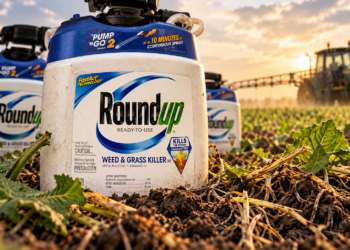
What I really appreciate with regenerative is the focus on healthy soil. If we can combine regenerative and organic we’d have the best of both worlds — like two sides of a ladder hitting at the top, coming together. That’s what I really try to promote, and that’s what I’m excited about. I tell my organic friends, “Don’t go back to feeding the plant. Focus on your soil.” And I tell my regenerative friends, “Don’t be satisfied with just a little Roundup. Keep going until you can really do it regeneratively in an organic way.” Organic without regenerative, I think, is just as lacking as regenerative without organic. Both are needed to make the whole thing work.
Acres U.S.A. What worries me about regenerative is that it allows the giant corporations that we’re talking about, who are developing these chemicals, to pivot into biologicals. Then they might say, “You don’t need as much chemical — use some of these biologicals,” but it’s much easier for them to get in that money system with regenerative.
Quinn. If you go on the Bayer website and read what they say about regenerative, it’s as though they invented it.
Acres U.S.A. They’re already adopting it, yeah. And the current administration is hammering the regenerative tagline, but where is all this going to go? I feel like it’s going to go to these big companies that are not really our friends; they’re just going to get a bunch of funding. I guess every tagline gets consumed by corporate capture, right? All the taglines that have come up since Acres U.S.A. has existed have been captured by something. Organic has probably held the best out of all of them.
Quinn. Yes, it’s a good thing to worry about. But I think that if you combine the two — organic and regenerative — that really slows down the takeover by the corporations. Industrial agriculture is the extraction of wealth from rural America. I mean, it’s nice if we reduce poisons, but we don’t want the extraction to continue. We want to be able to retain the wealth of rural America in rural America and not have half of Main Street boarded like we see now. If we can diversify and have more people on the farm doing a better job of growing better food that’s healthier for us, that heals us.
It’s going to be more expensive at the food counter, but it’s going to be way cheaper at the end. That’s what people have to think about. It’s an investment. Fifty years ago, we were paying 18 percent of our income for food. Now we’re paying 9 percent, but we’re paying 18 percent of our income for healthcare.
Acres U.S.A. I think people are going to wake up to that a little bit more. Our health insurance doubled from last year. We still ended up having to pay almost 10 grand out of pocket to have a baby in January. When I was growing up, my dad was a cop and my mom was a teacher. I didn’t think anyone paid any money for any visit to the hospital because the health insurance was that good back then; I think they were on $200 deductibles. People are going to start feeling the weight of paying the healthcare bill. So hopefully that changes a little bit.
But I do think there’s a pathway for farmers now. If you give them the markets to consider themselves regenerative — say, for a five- to 10-year transition — they can get a premium for being regenerative and doing good practices, with the goal of being organic in the end.
I also think the organic industry’s a little bit wary of regenerative. And I am too — regenerative is now getting premium prices similar to organic, but we should have a transition period for moving to organic — to get off of this chemical treadmill.
Quinn. Yes. Regenerative has been touted in Washington as the off-ramp from the chemical highway. And I think adding organic to it is really the on-ramp to a new way of agriculture that’s sustainable and has a future. We need to label things so people can understand — helping them make a good choice at the grocery store. We need a way to test food for nutrition in a way that is really legitimate, so people can easily know that they’re getting a higher value if they’re paying a little more.
Acres U.S.A. What are you seeing in Montana right now — are farm operations just getting bigger? Who’s buying the land? And what does it look like for the next generation of farmers who want to get on the land? It’s hard to wrap my mind around how they’re going to pay for it.
Quinn. Since I started high school almost 65 years ago, we’ve lost about three quarters of our neighbors. That’s not atypical in rural areas. Most of the farmers are saying to their kids, “Don’t even think about coming back to the farm. There’s no money here. There’s no future here. We’re not big enough to make a living.” Most of my farming neighbors are working another job, or their wives are working other jobs, so they’re holding on that way. And when their kids come back to the farm, rather than add another enterprise to the farm so they can survive, they add another farm to their farm. They buy out the neighbors. That’s mostly what’s happened. We’ve had a few come from outside — from Wall Street or wherever, with a big checkbook — and buy farms, but that’s the minority. Most farms are being bought up by people. They’re just getting bigger and bigger.
And because of that loss of families, the small towns don’t have the support they used to. Half of our main street is boarded up. We used to have three grocery stores. Now we have one. We used to have five bars; now we have three. These are big indicators. We used to have five grain elevators; now we have zero because everything’s so consolidated, and they expect farmers to haul their grain 50 miles, when we used to haul it 10.
That’s just the way consolidation and centralization is going. It’s all in the name of “save me a nickel at the grocery store,” but it’s costing dollars to everybody else to save that nickel.
I think if kids want to come back to the farm, and you need to expand, you should expand with enterprises on the same acres. Do something different that adds more value and not have to suck up the neighbor’s farm. Because once the parents are gone, then the kids are left with double the amount of land and half the neighbors. I think that’s a bad way to go.
Acres U.S.A. And you guys have adjusted because you branded your product as well.
Quinn. We added the enterprises. We added a wheat and flour mill first, and then we started adding products. We did the ancient wheat. We started making high-oleic safflower oil that we grow and sell to the University of Montana and Montana State University. We got the used oil back after they used it for cooking, and we cleaned it up and we put it in our tractor, so we sell it twice! There’s a big debate in this country about food versus fuel — of all the acres that are devoted to fuel instead of food. But if we grew things that we could use for food first and fuel second, that would be a huge closure of a circle that really is a bleeding artery in America.
Acres U.S.A. Yeah, the biggest opportunity is to figure out what to do with some of the corn acres.
Quinn. All we do is strain the used vegetable oil. We centrifuge it to take out the big pieces and put it through filters down to 10 microns so that it can go into a diesel engine. In Montana there are enough fry houses to run all of the agriculture in the whole state. And bigger cities in other states are producing a lot more excess oil that could be used for trucking — more than agriculture would need. Those are the kinds of partnerships and new ways of thinking I think that could benefit all of us — small communities in particular.
Acres U.S.A. You started The Quinn Institute, which is a research institute. Can you explain a little bit what your goals are and what projects you’re working on?
Quinn. Well, I have five kids, and none of them showed up to take over the farm. I didn’t want to sell it and ruin their lives with all that money. Even though it’s only a few thousand acres, that’s still a big pile of money if you sell it all at once. So I decided to take about a quarter of it — 800 acres — to create the Regenerative Organic Research Education and Health Institute. Our motto and our mission statement is “healing the earth by growing food as medicine.” It gets back to the idea I talked about earlier — allowing farmers to be paid like pharmacists if they grow food that heals, and trying to show them how to grow it — but also what kind of crops to grow that have healing properties innately in them.
We’re working on a couple projects right now that are just in the beginning stages. We’re looking at high-beta-glucan levels in hull-less barley. Beta-glucan is soluble fiber that can reduce cholesterol. And if you can reduce cholesterol with a breakfast cereal — a helping of barley rather than a statin pill — how much of an advantage would that be?
We’re also looking at hard white winter wheat. A lot of people in America don’t like their bread too brown, and you get brown bread with whole wheat bread that’s made with hard red wheat. But if you make it with hard white wheat, then you have something that is much less dark and more palatable. And we’re looking at flavor among those high-nutritional products. We found with Kamut that the better something tastes naturally, the more nutritious it usually is. Those are the kinds of projects we’re working on.
Then we’re operating with full-size fields in big rotations. We’re using a 12-year rotation. We’re looking at incorporating animals and showing farmers examples of how it can be done — what it looks like and how to solve challenges. We’re working with different solutions to perennial weeds, which are one of the biggest challenges to organic agriculture right now — not using chemicals to control these weeds but trying to figure out how to use biologicals or rotations or other crops to smother them.
It’s really a lot of fun. We’re just in the third year. We have three full-time employees now. One is more in the office, running social media and the books, and two are helping me out in the field. You can learn all about us at quinninstitute.org.
Acres U.S.A. People can buy your grain online too, can’t they?
Quinn. Yes. If you go to kamut.com, you can find where it’s sold and what stores have it nearest you. My nephew has taken over that whole operation now. I’ve sold all my businesses and am focusing on the research institute.