

Seven lessons I’ve learned on how to successfully deal with mud season
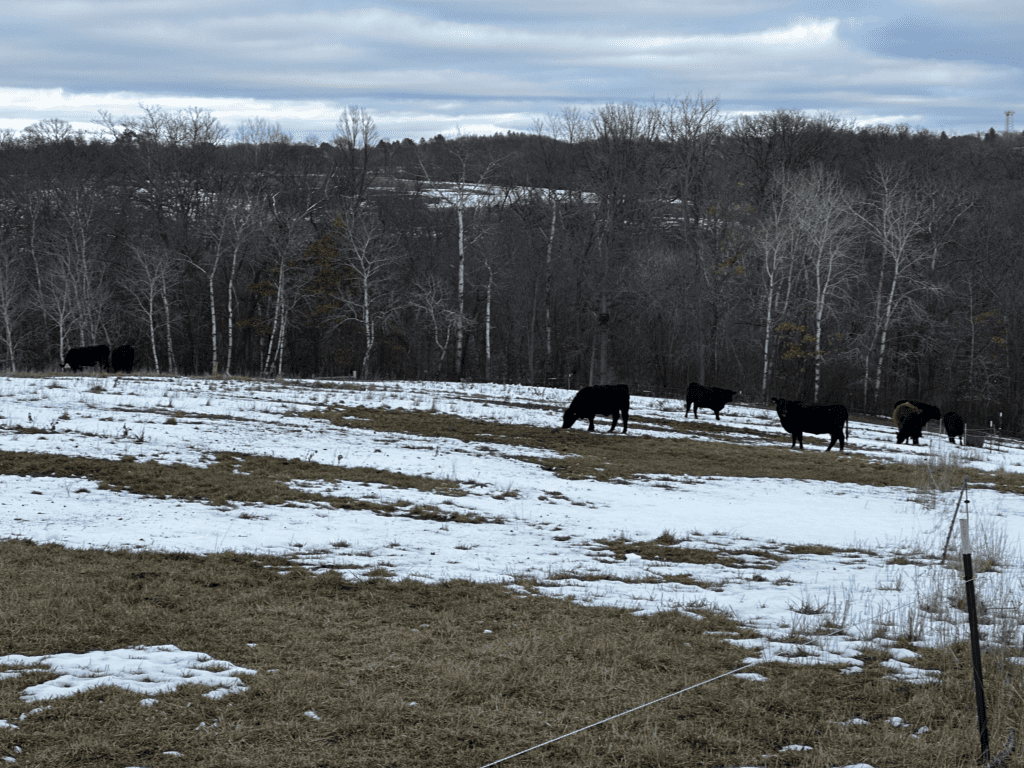
February and March in southwest Wisconsin can be some of the toughest days to be a grazier. Temps are in the negatives to the 50s, with rains, snow, wind and ice. These are some of the most challenging months for animal health and for our pastures.
My first winter carrying pregnant heifers I had one that was struggling through the winter and developed a limp. It was the heart of mud season, and I had even more mud than I bargained for — the type that swallows your boots.
I made many mistakes that day. I tried to corral her. I separated her from her peers. I did all of this alone, and I was rushed. I was stressed, and so was she. Prior management mistakes came back to bite me. I hadn’t moved water away from our highest-trafficked areas.
I learned that day that I need to manage mud. The mud played a role in my pregnant heifer’s extra stress, and I could have alleviated some of that. Here are the things I think about on daily basis during mud season:

- Multiple shelter locations. I am a believer in providing cattle a good block from north and west winds most of the winter, and having a roof for the worst stretches. This is similar to how I believe in shade in the summer — cattle don’t need it all the time, but 10-15 percent of the days it’s good to have a roof over their heads.
About 20-30 percent of the time in the winter I make sure they have a block from winds coming from the north and west. I create multiple areas for shelter with good drainage during the winter, and I rotate them through the year. I have two shelters — our main cattle handling facility and a big deer blind. Both areas get a layer of wood chips and bedding and are planted with cover crops throughout the year. We have timber paddocks that are useful if the two shelters get overused. We are clearing buckthorn in those areas and will pile them up so the cattle can bed on the south sides, with a north and west block.
- Cover the soil and pile on carbon: Managing our grass during the growing season provides a strong sod structure that holds up well against mud. In annual fields, if cattle spend time on them in the winter, we make sure to grow cover crops blended with lots of carbon and biomass.
Areas that are heavy with traffic are the first mud pits and toughest areas. I pile on carbon, spreading wood chips in heavy traffic intersections. If I don’t have chips I will cover with old hay or bedding. “Cover the ground” is one of the principles of soil health, and it’s no less true for livestock than for crops.
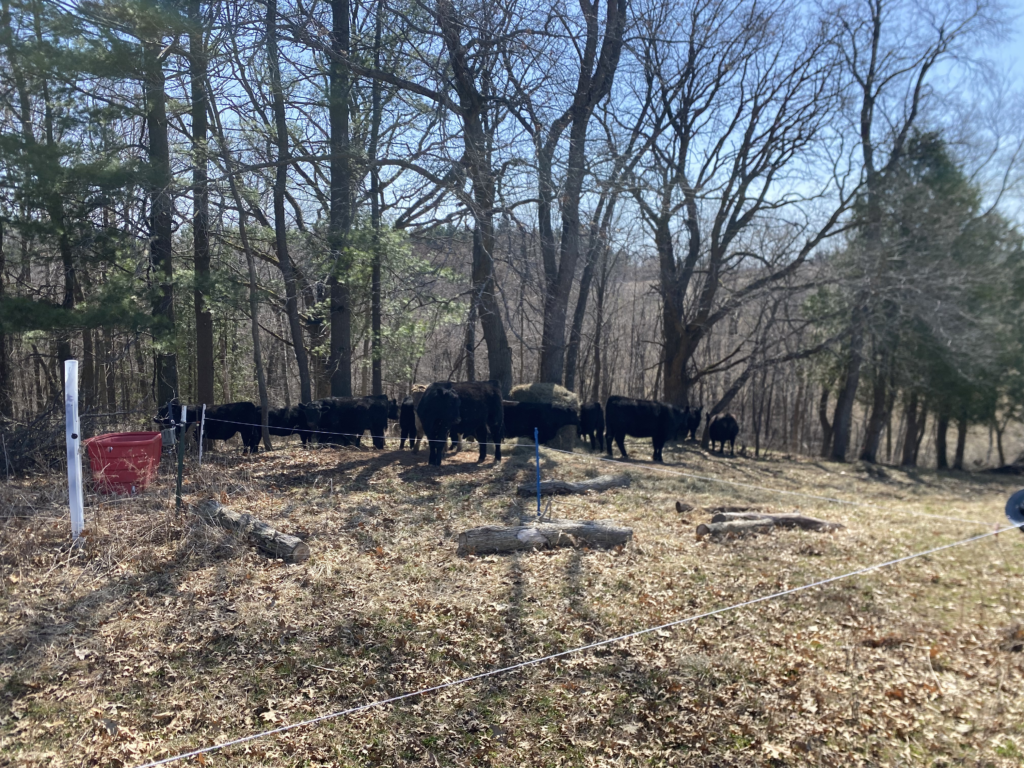
- Study topography on maps and on the ground. I have found a handful of dry spots that I target during mud season. One is a farm that runs along a north-south spine with downslopes facing east and west. The east side of the pasture will stay frozen about a week longer than the west. When the west gets soft we go to the east, and once the east starts to loosen, the west will be closer to being dry. I plan for paddocks on the ridge. I know my best high spots that shed water well, and I plant heavy-residue cover crops that supply good bedding. I always know where the first dry paddocks are and don’t use them during the frozen periods.
- Keep them moving! We move one to two times a day in the growing season and once a week in the winter, and sometimes more during mud season. It is incredible how quickly the ground bounces back when you get off of it. In times when I have mistakenly mucked an area up, it’s amazing what 30-60 days of rest does, even in the winter.
- Plan for the weather. Get the animals to advantageous places, based on the forecast. I focus on precip and what follows. Will it be wet with cold overnights? We might use the shelter. Is it mild but muddy? I get them on the ridges. Constantly looking at the weather helps me plan a week to 10 days out, and then I can make small adjustments if needed.
- Use rolled-out bale grazing. During the worst parts of mud season I avoid the bale feeder and roll out the bales. I don’t think there is any way around it. You just have to accept that you will use more bedding and feed during the mud.
I mix my bale feeding methods throughout the year. If I could stomach it, I would roll out bales all year, but at times in the heart of winter I do like to do this. It also gives me a sense of assurance to see an upright bale; I know the feed is there. But when it is muddy I will get out in the frozen morning and roll bales out, with the understanding that I am “wasting” more. But this ties back to the carbon discussion above — I’m working every winter to get better at just feeding the soil with our hay. That said, $100 bales this winter made it harder to stomach.
- Finally, remember that grazing is making a positive impact! It’s a thin line, and at times it changes within hours, but I think mud season provides an opportunity to give the soil a little “bruise” — where hooves can puncture the hard pan of the soil. Yet you never want to see them knuckle deep in the mud.
Mud season encapsulates the never-ending dance of management between the animals, land and weather. I am still struggling through this. I think mud may be synonymous with cattle at times. But I keep getting closer to winning the battle with lessons I learn on a yearly basis. By no means am I an expert, but I am certainly a cattle farmer who likes to see cattle hides clean and hooves above the ground.
Taylor Henry raises cattle in Wisconsin and is the owner and CEO of Acres U.S.A.