
Neither weeds in the field nor bodily ailments are so much problems as they are indicators and teachers
Tell me a story — the tale of your farm. I want to hear the highs and lows, its deepest pain or challenge, and how it transformed you and the farm over the years.
This process for learning about one’s farm is similar to the one that Terrain Advocates of the Metabolic Terrain Institute of Health (MTIH) ask of someone who is experiencing their cancer journey. In each processes, the farm advisor or Terrain Advocate will ask about different aspects of the farm or one’s body, in order to develop a more personalized picture of health. As we discussed in our last Acres U.S.A. article, in September, the advisor walks the client through the spectrum of improvement by taking the very next best step for one’s farm or personal health.
One step in this process of change is to recognize that oftentimes what is identified as the perceived problem may actually be the needed remedy, and that the symptom, or what is obvious on the outside, is pointing toward a deeper root cause — something that needs to be addressed on the inside.
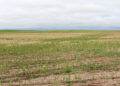
Let’s offer the “problem” of weeds as an example. “Problem” is in quotations because conventional weed management — labeling particular plant species as serious challenges — has only been popularized since the dawn of the herbicide and GMO industries. In fact, herbicide “solutions” are likely making the weed “problem” worse by fast-tracking herbicide resistance. Is a plant ever truly “noxious” — as conventional agriculture defines the more persistent “weeds,” like marestail, waterhemp, or pigweed?
A weed gone rogue — out of control in a field — is similar to the cancer cells that escape the immune system in a person and begin to form into a tumor. Human cells do not start as cancer; all cells begin good, pure, life-giving, intact and whole — much like functional ecosystems that are balanced and that cycle nutrients and ecosystem resources. In a farm field, when one particular plant grows too abundantly and is deemed aggressive and unmanageable, it is like the “cancer” of the field. These plant species have become problematic due to systemic management through monocultures — fields with little to no species diversity, crop rotation, or animal impact, and with overapplied herbicide regimens that reinforce the resistant genetics. Due to herbicide resistance, it is clear that the war on weeds is not working; it is time for a different approach.
In the Terrain 10 approach to human health, we do not go after cancer by simply killing it; we start with hearing the story and investigating the bio-individual background of the person. We also believe that one’s illness has showed up with a purpose for one’s healing journey.

The same can be true with weeds. Instead of damning certain plant species to death, what if they are here to teach? Weeds indicate information about the soil, like compaction, nutrient availability, pH and water holding capacity. This has been documented in books like When Weeds Talk by Jay L McCaman and Weeds and What They Tell Us by Ehrenfried Pfeiffer, one of the fathers of biodynamic agriculture. Within biodynamics, compounds are extracted from what may be considered problematic plant species, like dandelions (biodynamic preparation 506) and horsetail (biodynamic preparation 508), and are applied to farm fields as life-infusing remedies for the soil and plant microbiomes.
As another example, some farmers plant pollinator strips of what may be considered “weeds” in order to attract predator insects to balance out pest pressure. Still others — herbalists and terrain practitioners — use homeopathic essences derived from “weeds” and some poisonous plants to supply the antidote for particular medical conditions.
In each of these, the “weed” or “problem” can be used as the medicine to heal something broken in the system, either on the farm or in the human body. Our perspective is that what we perceive as problematic may only be so because it does not fit within our narrow-minded beliefs or management strategies. Before jumping to eradicate the problem, perhaps we might consider how it contains information or a lesson from the natural wisdom of ecology. In other words, what if the thing that is challenging you or your farm is actually the medicine that you or it needs to regenerate and heal? As we begin the slower winter season, we are contemplating how this principle can apply to your farm’s well-being and healing.
Dani Kusner is a Certified Crop Advisor, independent consultant, certified Terrain Advocate, and owner of Deep Soil, a company that serves the intersection of soil health and human health (dani@deepsoilhealth.com).
Dr. Nasha Winters is a licensed naturopathic doctor (ND) and is an expert in integrative cancer research. She is the author of The Metabolic Approach to Cancer, and she and her team are currently building a first-of-its-kind integrative cancer hospital and research institute (the Metabolic Terrain Institute of Health) in southern Arizona (mtih.org).
Hear Dr. Nasha speak again at this year’s AcresUSA Eco-Ag Conference, 4-7 December (events.acresusa.com), on “Problem as Remedy.”