

We should evaluate agricultural systems on soil health and crop nutrient density, not ideology
During my lifelong experience with agriculture, I have had the opportunity to observe a wide array of cropping and grazing systems across the United States and Canada. These systems spanned plain community farms, small- and large-scale organic operations, conventional commodity-producing farms, and what is increasingly referred to as regenerative agriculture farms. Each system employs its own combination of tools, inputs and crop types within a context of climate, capital, and workforce constraints.
The diversity of these systems reflects not only differences in philosophies but also differences in enterprises and goals. Any meaningful evaluation of agricultural systems must move beyond systems ideology and focus instead on outcomes.
In my view, two outcomes matter most: the health of the soil and the nutrient density of the food produced. If a farming system cannot maintain or improve soil function while producing nutritionally meaningful food, its long-term value is questionable.
Defining Soil Health as a Functional System
“Soil health” is often used as a vague marketing or aspirational term. It is time for soil health to serve as a standard that can be evaluated, based on measurable and observable properties. Soil is not simply a plant growth medium; it is a dynamic biological system that functions to develop the physical structure of the soil and regulate its chemical processes while interacting with plants. Soil health is defined by USDA as “… the continued capacity of soil to function as a vital living ecosystem that sustains plants, animals, and humans.” It is the capacity of soil to function that should be our focus in agriculture, not how many bushels, bales, or pounds we can harvest per acre.
Physical indicators of soil health include aggregation, bulk density, porosity, water infiltration rate, and water-holding capacity. Well-aggregated soil allows the soil and plants growing in it to function at their best. Chemical indicators of soil health include pH, cation exchange capacity (CEC), salinity, and nutrient availability. It is important to distinguish between soil fertility (the presence of crop nutrients measured by a soil test) and the capacity of soil biology to make crop nutrients available as plants need them. Biological soil health indicators include microbial biomass, respiration rates, enzymatic activity, community composition (e.g., fungal-to-bacterial ratios), and earthworms. These metrics mirror the soil’s ability to cycle nutrients, build and maintain structure, and support plant health.
Research has increasingly demonstrated that biological activity is a principal indicator of soil function. For example, Haney et al. (2010) showed that soil respiration and water-extractable organic carbon are strongly correlated with nitrogen mineralization potential, suggesting that biologically active soils are more capable of supplying plant-available nutrients without external inputs such as fertilizers. But nitrogen isn’t the only nutrient important to producing healthy, nutrient-dense plants. A diverse and stable soil microbiome is needed to be able to supply plants what they need in forms that allow them to grow and manufacture complex higher-molecular-weight compounds that define nutritious food.
Mechanisms Linking Soil Function to Crop Nutrient Density
The claim that soil health influences food nutrient density is often asserted but not always supported or explained. The relationship between the soil microbiome and plants is facilitated by several well-established processes that are often overlooked in many contemporary cropping systems.
Even though plants do acquire some of their nutrients from the soil through passive uptake, it is the biologically mediated processes that are much more efficient and specific to the needs of the plant. Root exudates — carbon compounds released during photosynthesis — feed soil microbes, which in turn mineralize nutrients and make them plant-available. Plants then acquire many of these nutrients by connecting directly with mycorrhizal fungi or physically internalizing bacteria through rhizophagy. This exchange of sugars and other compounds from plant roots to the soil microbiome in exchange for nutrients is central to what has been described as the “liquid carbon pathway” (Jones 2017). It is this pathway that also allows stable forms of carbon to be stored in the soil for longer periods of time.
Mycorrhizal fungi play a particularly important role in building soil aggregates and feeding plants. These symbiotic organisms extend the effective root system of plants, increasing access to water, phosphorus, zinc, copper, and other micronutrients (Smith & Read, 2008). In degraded soils with low biological activity and in soils that experience frequent tillage, the relationships plants have with mycorrhizal fungi are often diminished or absent.
There is also evidence of a “dilution effect” in high-yield systems. As yields increase through genetic modification of plants and intensification of synthetic inputs, nutrient concentration per unit of plant biomass can decline (Davis et al. 2004). This suggests that maximizing yield does not guarantee nutritional quality.
In contrast, biologically functional soils tend to support more balanced nutrient uptake, resulting in crops with higher concentrations of minerals and secondary metabolites, including phytonutrients. These nutritional differences are being increasingly measured and highlighted in the direct marketing of produce from farms with healthy soils (Montgomery et al. 2022).
Measuring What Matters
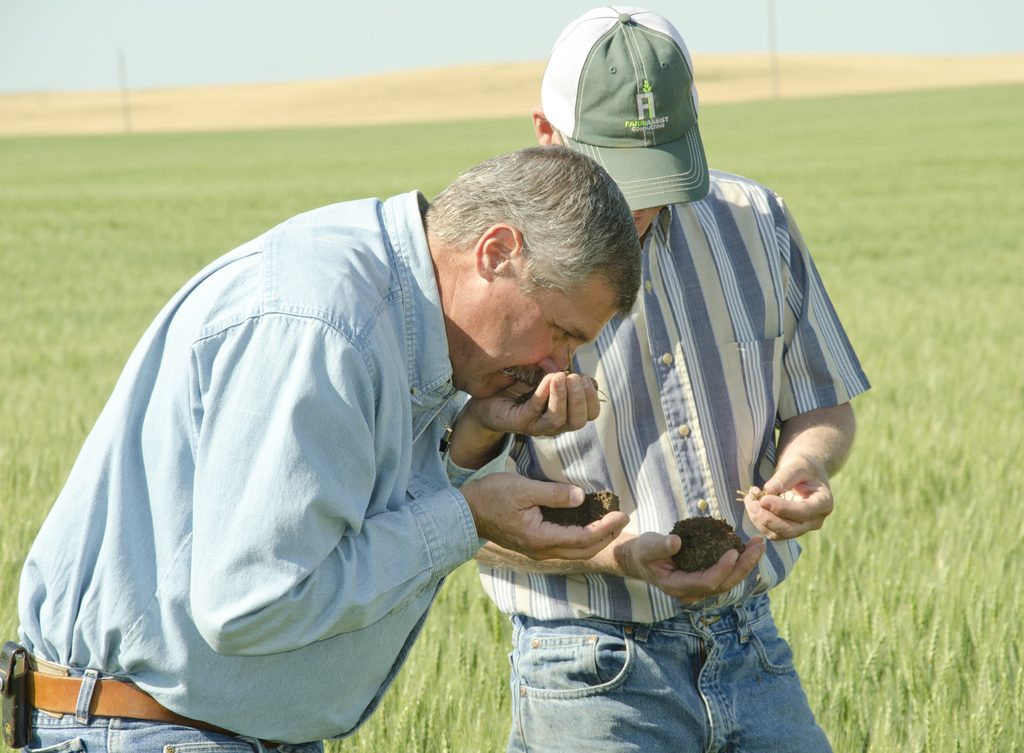
Advances in analytical tools have made it increasingly feasible to assess both soil function and crop nutrient density. There are also soil health indicators such as aggregate stability, water infiltration, and earthworm counts that are very easy to perform yourself. Standard soil tests for nitrogen, phosphorus, potassium, and other elements extracted from the soil are useful for input-based systems but offer little insight into soil-function-based systems. We therefore need to measure what matters and informs us about a healthy, biologically functioning soil.
Soil assessment tools:

- The Haney Soil Health Test (measuring respiration and labile carbon/nitrogen)
- PLFA (phospholipid fatty acid analysis) for microbial community structure
- Soil aggregate stability tests
- Water infiltration measurements, which integrate both soil aggregate stability at the soil surface and porosity below the soil surface
- Earthworm counts
Plant and food quality assessments:
- Sap analysis (real-time plant nutrient status)
- Brix of plant sap (as a proxy for dissolved solids and plant metabolic activity)
- Dry plant tissue analysis
- Laboratory chemical/mineral/compound assays
Just as our own health is assessed, there is no single indicator of soil health that is definitive. I prefer aggregate stability, PLFA, and earthworm counts to form a picture of soil health. Plant sap and tissue analysis are helpful to determine if plants are being well supported by the soil microbiome as the plants grow. Laboratory analysis of the final product of grain, fruit, meat, etc. is essential to know if the food in question is either nutrient dense or nutrient deficient. Many of these tests are becoming more affordable and accessible, increasing the likelihood that they will influence buyers and consumers in the future.
Tradeoffs and Systems Thinking
It seems that discussions about agricultural systems and practices often devolve into debates over specific tools — tillage versus herbicides, synthetic versus organic inputs, etc. Every tool has tradeoffs, and its impact on soil health depends on how it is used within the context of a given system. The negative impacts of tools often occur from excessive application. Excessive amounts of fertilizer, excessive application of pesticides, and excessive tillage are more often the issue than their actual use, as long as they are used in a way that honors the soil microbiome rather than ignoring it. Tillage, for example, can provide effective weed control and seedbed preparation, but it disrupts soil structure and microbial habitat. Herbicides can reduce labor and preserve soil structure, but they may negatively affect non-target organisms and contribute to weed resistance issues in systems that lack crop rotation diversity.
A systems approach requires evaluating the net effect of any of these tools over time. Short-term gains in efficiency or yield must be weighed against long-term impacts on soil function and input dependency. Energy use is another critical dimension and cost in any operation. Inputs for any system require energy to produce and deliver them to the soil or plants. Synthetic crop fertilizers are energy intensive to produce and transport, while tillage consumes both fuel and labor. Cropping systems that instead rely on soil biology use solar energy captured through photosynthesis and cycled through the soil food web to power a crop production system instead of diesel fuel, electricity, or natural gas.
Pathways for a Transition to Restore Soil Health
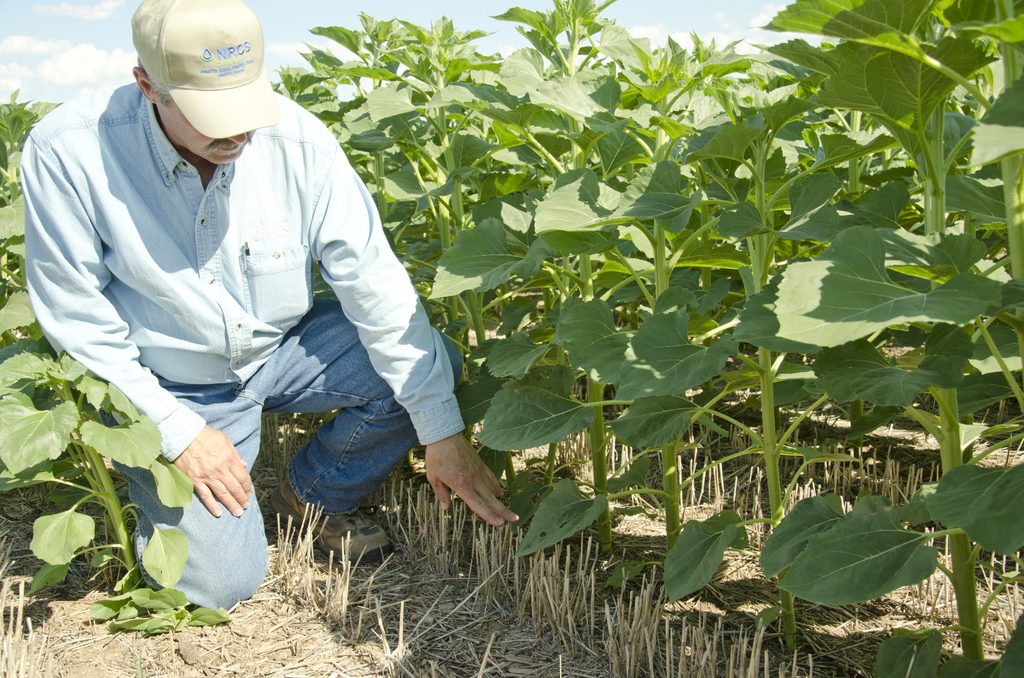
If you assess your soil health and determine that your soil is not functioning optimally, the question becomes: What changes are necessary? Usually, the answer is less — less tillage, less fertilizer, and overall less interference with the workings of the soil microbiome. The answer is to be aware of, and to foster, the conditions in the soil that support soil biology rather than hinder it.
While specific strategies must be tailored to the context of each farm, the principles of managing for soil health are universally applicable to any agricultural operation:
- Reduce disturbance. Minimize tillage intensity and frequency to preserve soil structure and microbial habitat.
- Increase diversity. Include diverse crop rotations and multi-species cover crops to support a broader range of soil organisms.
- Maintain living roots. Keep plants growing as much of the year as possible to sustain biological activity with root exudates.
- Keep the soil covered at all times. The soil should always be protected from wind, rain, and sun by keeping it covered with plant residues and/or living plants as much of the time as possible.
These principles can be put into practice in many different ways to restore key soil functions. Compare the four soil health principles to your current system and determine where changes need to be made. Then think outside of your current paradigm to find ways to implement the changes that will improve soil health.
Western North Dakota Example of Restoring Soil Health
A soil health demonstration project in Dunn County, North Dakota, showed several noteworthy changes in soil health over the eight-year period of the project (Eisenbraun 2011). Water infiltration increased from 1.3 inches/hour to 10.2 inches/hour as soil aggregates and pores in the soil improved, soil organic matter increased from 2.7 to 3.0 percent, and plant-available nitrogen supplied by the soil microbiome increased from 100 pounds/acre/year to 275 pounds/acre/year.
The number of predator organisms in the soil (protozoa in particular) increased over 100 percent. When prey organisms are consumed by predator organisms, organic forms of crop nutrients are liberated and become plant available — particularly nitrogen (Franzen 2019). This kind of nutrient cycling can reduce the need for nitrogen fertilizers to zero.
Soil health management systems with no tillage and diverse crop rotations are now commonplace on millions of acres of cropland across the western half of North Dakota. These regenerative systems have indeed restored the capacity of the soil to function and to infiltrate water and cycle/supply crop nutrients effectively.
Economic and Structural Constraints
Transitioning to a soil health management system is not solely a technical decision. Producers operate within their own economic parameters that often prioritize short-term yield and returns. Many producers face high debt loads that require cash flow, equipment that may need to be replaced to practice less tillage, crop insurance parameters that do not accommodate crop rotation diversification and commodity markets that do not (yet) reward nutrient density of crops produced. However, there are immediate savings that can be realized by reducing both tillage and fertilizer inputs in ways that do not significantly sacrifice crop yields.
Rather than debating which agricultural system is “best,” a more productive approach for each producer may be to evaluate how well their system supports soil function and, in turn, plant and human health.
This requires a shift from crop input-based thinking to soil function-based thinking:
- Measure soil and plant health using meaningful indicators
- Identify limiting soil functions within the system
- Adjust management practices to address those limitations
- Re-measure and iterate over time to assure soil health is improving
This approach does not require the abandonment of cultural or philosophical identities. It requires aligning management decisions with the biological realities of how soil systems function. Ultimately, agriculture is not just about producing yield — it is about stewarding the soil as a living system that sustains both the soil and all of us that depend on it.