
Acres U.S.A.® Magazine
  • Articles
    • News
    • Ecological farming
      • Climate
      • Environmental Issues
      • Farm management & planning
      • Human health
    • Livestock
    • Farm
    • Crop
      • Crop management practices
        • Ag technology
        • Cover crops
        • Crop nutrition
          • Crop protection
          • Diseases
        • Crops
        • Fruits
    • Soil
    • Opinion
  • Resources
    • Magazine
    • Online Learning
    • Newsletters
    • Free Articles
    • Blog
  • Magazine Issues
    • 2026
      • February 2026
      • January 2026
    • 2025
      • December 2025
      • November 2025
      • October 2025
      • September 2025
      • August 2025
      • July 2025
      • June 2025
      • May 2025
      • April 2025
      • March 2025
      • February 2025
      • January 2025
    • 2024
      • December 2024
      • November 2024
      • October 2024
      • September 2024
      • August 2024
      • July 2024
      • June 2024
      • May 2024
      • April 2024
      • March 2024
      • February 2024
      • January 2024
    • 2023
      • December 2023
      • November 2023
      • October 2023
      • August 2023
      • July 2023
      • June 2023
      • May 2023
      • April 2023
      • March 2023
      • February 2023
      • January 2023
    • 2022
      • December 2022
      • November 2022
      • October 2022
      • September 2022
      • August 2022
      • July 2022
      • June 2022
      • May 2022
      • April 2022
      • March 2022
      • February 2022
  • About Us
    • Our History
    • Our Staff
    • Contact Us
    • Community
      • Soil Health Primer Resources
  • Events
    • Eco-Ag Conference
    • Farm Weird Event
    • Viroqua On Farm Event
  • Subscribe
  • Login
  • Register
No Result
View All Result
  • Articles
    • News
    • Ecological farming
      • Climate
      • Environmental Issues
      • Farm management & planning
      • Human health
    • Livestock
    • Farm
    • Crop
      • Crop management practices
        • Ag technology
        • Cover crops
        • Crop nutrition
          • Crop protection
          • Diseases
        • Crops
        • Fruits
    • Soil
    • Opinion
  • Resources
    • Magazine
    • Online Learning
    • Newsletters
    • Free Articles
    • Blog
  • Magazine Issues
    • 2026
      • February 2026
      • January 2026
    • 2025
      • December 2025
      • November 2025
      • October 2025
      • September 2025
      • August 2025
      • July 2025
      • June 2025
      • May 2025
      • April 2025
      • March 2025
      • February 2025
      • January 2025
    • 2024
      • December 2024
      • November 2024
      • October 2024
      • September 2024
      • August 2024
      • July 2024
      • June 2024
      • May 2024
      • April 2024
      • March 2024
      • February 2024
      • January 2024
    • 2023
      • December 2023
      • November 2023
      • October 2023
      • August 2023
      • July 2023
      • June 2023
      • May 2023
      • April 2023
      • March 2023
      • February 2023
      • January 2023
    • 2022
      • December 2022
      • November 2022
      • October 2022
      • September 2022
      • August 2022
      • July 2022
      • June 2022
      • May 2022
      • April 2022
      • March 2022
      • February 2022
  • About Us
    • Our History
    • Our Staff
    • Contact Us
    • Community
      • Soil Health Primer Resources
  • Events
    • Eco-Ag Conference
    • Farm Weird Event
    • Viroqua On Farm Event
  • Subscribe
No Result
View All Result
Acres U.S.A.® Magazine
No Result
View All Result
Home General

Bee More Resilient

Acres U.S.A. by Acres U.S.A.
March 12, 2024
in General
0
Bee More Resilient
0
SHARES
14
VIEWS
Share on FacebookShare on Twitter

Raising Resilient Bees: Heritage Techniques to Mitigate Mites, Preserve Locally Adapted Genetics, and Grow Your Apiary by Eric and Joy McEwen
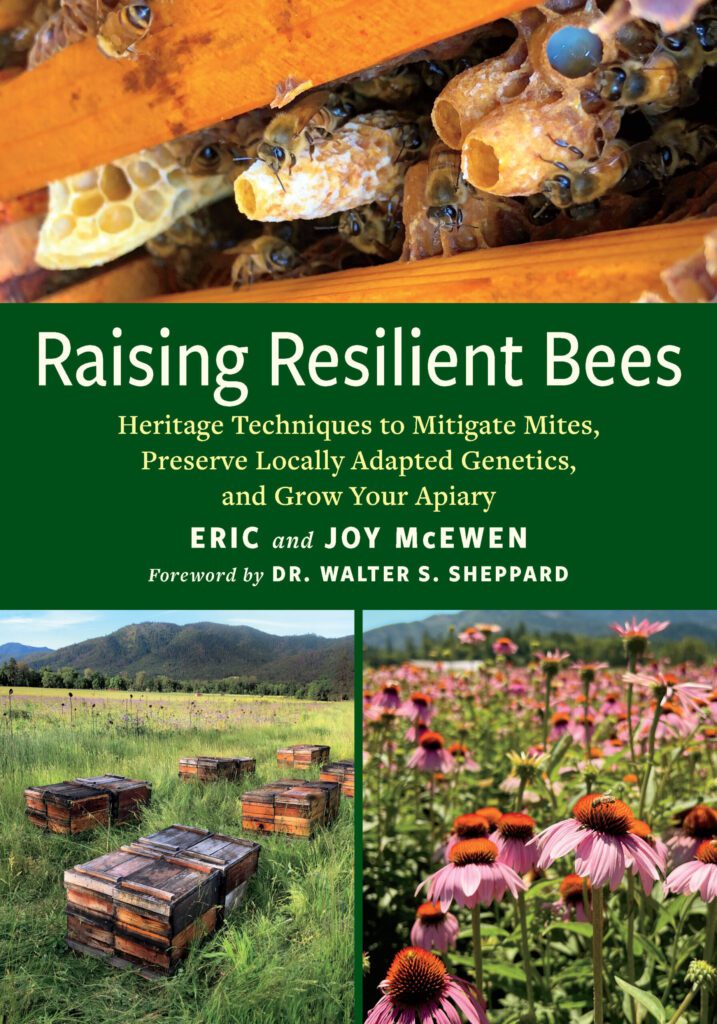
There are many excellent titles about natural/holistic beekeeping. But Raising Resilient Bees by Eric and Joy McEwen stands out as a book that will be of particular value to the small- and mid-scale commercial beekeeper looking for more in-depth information on apiary systems based on natural approaches.

The McEwens began keeping bees over two decades ago as idealistic young people wanting to apply hands-off techniques, hoping to be able to simply select for bees that were resistant to mites / disease / colony collapse disorder. Over time, and after crippling losses many years, they realized that that approach alone wasn’t working. The introduction of the varroa mite into North America in the nineties — to bee populations that had no resistance to it — along with increased herbicide and pesticide use in many beekeeping areas — has proven as challenging as many beekeepers initially feared.

Commercial operations, with full synthetic chemical controls, still lose 30-40 percent of their hives every winter (compared to single digits prior to varroa’s arrival), and it isn’t uncommon for an apiary to lose 50-60 percent. As the authors note, “Succeeding in the face of these challenges requires a sophisticated level of understanding and commitment to the craft — information that some hobbyist beekeepers struggle to access and implement.” 

So, the authors don’t advocate a “do nothing” approach — this can be unethical toward the bees themselves and can also support bad genetics when untended hives swarm and spread their undesirable traits to surrounding operations. The McEwens summarize their approach as seeking “to assist colonies under pressure with minimalistic interventions at appropriate times before catastrophe. We particularly seek to support hives that show the greatest promise of evolving a long-term strategy to coexist with a new parasite rather than risk losing them when threats become severe.” To that end, they describe in detail their principles of hive design, natural queen selection and mite mitigation.

While honeybees can survive in a number of different types of hives, from traditional skeps to the common Langstroth and the rarer (in North America, at least) Warre, Lazutin and top-bar hives, climate should dictate the particular design. The authors discuss the ideal volume for hives, describing how they developed their own design that considers the habits of bees in their temperate Oregon climate. Acres U.S.A. executive editor John Kempf uses a very similar hive in Ohio, custom-designed to be one frame smaller and more insulated.

Eric McEwen has a genetics background, so from the beginning he has been involved in the work of trying to breed varieties of bees that are more resistant to varroa and to disease. The authors describe the steps and missteps they took along the way and strike a word of caution against the widespread practice of grafting. In its place, they describe step-by-step how they rear new genetically diverse queens naturally.

The authors also go into great detail on their mite prevention protocols. They use a timing-driven, minimal-intervention approach that relies on walk-away splits and other forms of hive division. These divisions serve to encourage natural queen rearing for increased genetic resilience; they also allow the keepers to make timely applications of mild organic mite-control treatments.

Raising Resilient Bees is not a comprehensive guide, nor is it for beginners — it quickly gets into details that will be of little use to new beekeepers but that could be of vital significance to experienced commercial apiarists. The only note of caution for readers is that while the McEwens’ methods “have allowed our operation to persist in an equilibrium that allows both bees and beekeepers to prosper,” they never explicitly mention in the book how successful they’ve been in recent years in terms of percent of hives maintained over the winter.

The book concludes with discussions of the authors’ business strategies and some of the bee products they’ve been able to successfully market, including propolis, beeswax and even bee venom therapy.Like growing high-quality vegetables, keeping healthy, productive bees is a true craft. In this era of technology that enables us to be incredibly productive, we often lose sight of what true craftsmanship is. Think, for example, of building cabinets from scratch — the level of skill required isn’t technically beyond most of us, but very few have the knowledge and the training needed to build straight, level, functional cabinets. This is the same level of skill needed to grow consistently top-notch crops or to raise healthy livestock, including bees. Raising Resilient Bees is a valuable contribution to the literature on this important craft.

New Edition of a Classic
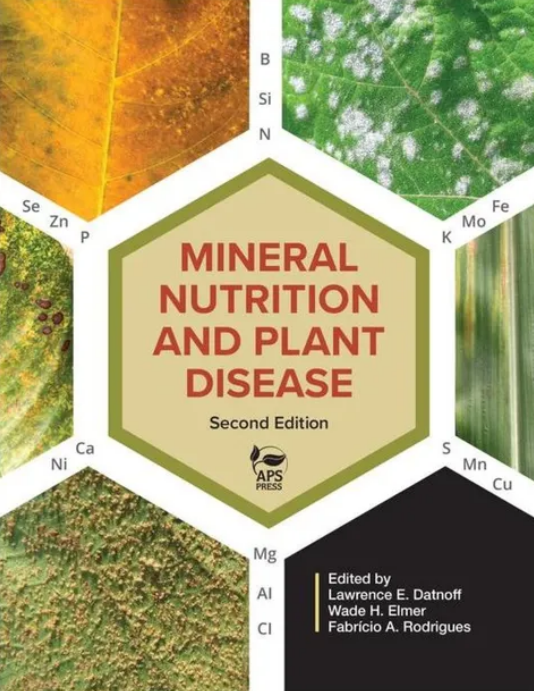
If you’ve ever been to an Acres U.S.A. conference, you’ll likely have heard at least one speaker reference the book Mineral Nutrition and Plant Disease. In an era when the standard for dealing with plant disease is to attempt to kill the pathogen, this book is a comprehensive resource on how different macro- and micronutrient deficiencies (and excesses) are actually what make plants vulnerable to disease. 

The second edition was released this year, with much greater detail and updates from new authors, including:

  • a better understanding of the role of nitrate in activating host defense responses
  • greater attention to beneficial microorganisms and how they help with phosphorus uptake and interact with plant pathogens
  • new findings regarding the effect of calcium on the activities of plant enzymes and their association with biological control
  • a new section on soil fertility management to control diseases in conventional and organic agriculture
  • new research on the effects of aluminum on plant pathogens and suppression of the diseases they cause in the context of mineral and organic soils

Copies are available at bookstore.acresusa.com, or via mail or phone.

← Previous Measuring Microbes Next ECO-MEETINGS →
Tags: Apiary SystemsBeekeepingNatural Beekeeping
Acres U.S.A.

Acres U.S.A.

North America’s oldest publisher on production-scale organic and regenerative farming. For more than 50 years, our mission has been to help farmers, ranchers and market gardeners grow food profitably, regeneratively, and with nature in mind.

Next Post

ECO-MEETINGS

  • Trending
  • Comments
  • Latest
The Most Important Livestock in Our Fields

The Most Important Livestock in Our Fields

July 1, 2024
Glyphosate Does What It’s Designed to Do — Kill

Glyphosate Does What It’s Designed to Do — Kill

February 19, 2025
The Take-Half, Leave-Half Fallacy

The Take-Half, Leave-Half Fallacy

July 1, 2025
USDA organic seal over American farm land

Losing Organic Farms

January 27, 2026
We Don’t Need Another Bridge — We Need an Off-Ramp

We Don’t Need Another Bridge — We Need an Off-Ramp

3
Under One Roof

Under One Roof

3
A Rose By Any Other Name

A Rose By Any Other Name

2
Terra Preta’s Biological Advantage

Terra Preta’s Biological Advantage

2
Roundup glyphosate herbicide referenced in debate over national security executive order

ROUNDUP PIE

March 5, 2026
What Does “Cutting Red Tape” Mean for Eco-Ag?

What Does “Cutting Red Tape” Mean for Eco-Ag?

March 4, 2026
March 2026 • Issue #657

March 2026 • Issue #657

March 1, 2026
Fungicides and Tillage and Bare Soil, Oh My!

Fungicides and Tillage and Bare Soil, Oh My!

March 1, 2026

Recent News

Roundup glyphosate herbicide referenced in debate over national security executive order

ROUNDUP PIE

March 5, 2026
What Does “Cutting Red Tape” Mean for Eco-Ag?

What Does “Cutting Red Tape” Mean for Eco-Ag?

March 4, 2026
March 2026 • Issue #657

March 2026 • Issue #657

March 1, 2026
Fungicides and Tillage and Bare Soil, Oh My!

Fungicides and Tillage and Bare Soil, Oh My!

March 1, 2026

About ACRES USA

Acres U.S.A.® Magazine

Acres U.S.A.® is North America’s oldest publisher on production-scale organic and regenerative farming. For more than 50 years, our mission has been to help farmers, ranchers and market gardeners grow food profitably and sustainably, with nature in mind.

Magazine Issues

  • News
  • 2025
    • June 2025
    • May 2025
    • April 2025
    • March 2025
    • February 2025
    • January 2025
  • 2024 Articles
    • December 2024
    • November 2024
    • October 2024
    • September 2024
    • August 2024
    • July 2024
    • June 2024
    • May 2024
    • April 2024
    • March 2024
    • February 2024
    • January 2024
  • December 2023
    • December 2023
    • November 2023
    • October 2023
    • August 2023
    • July 2023
    • June 2023
    • May 2023
    • April 2023
    • March 2023
    • February 2023
    • January 2023
  • December 2022
    • November 2022
    • October 2022
    • September 2022
    • August 2022
    • July 2022
    • June 2022
    • May 2022
    • April 2022
    • March 2022

Contact Acres U.S.A

  • Contact Us
  • About Us
  • Advertise With Acres U.S.A.
  • My Subscription

Learn

  • Resources
  • Events
  • Magazine
  • Newsletters
  • Free Articles
  • Webinars
  • Online Courses
  • Bookstore

Our All Socials

Follow With Us...

  • My account
  • News
  • Ecological farming
  • Refund and Returns Policy
  • Privacy & Policy

© 2024 Acers USA Magazine

Welcome Back!

Login to your account below

Forgotten Password? Sign Up

Create New Account!

Fill the forms below to register

All fields are required. Log In

Retrieve your password

Please enter your username or email address to reset your password.

Log In
No Result
View All Result
  • HOME
  • ARTICLES
    • News
    • Farm
    • Ecological farming
    • Livestock
    • Crop
      • Crop management practices
      • Cover crops
      • Crop nutrition
      • Crop protection
      • Crops
      • Ag technology
    • Soil
    • Opinion
  • RESOURCES
    • Magazine
    • Online Learning
    • Newsletters
    • Blog
    • Free Articles
  • MAGAZINE ISSUES
    • 2025
      • June 2025
      • May 2025
      • April 2025
      • March 2025
      • February 2025
      • January 2025
    • 2024
      • December 2024
      • November 2024
      • October 2024
      • September 2024
      • August 2024
      • July 2024
      • June 2024
      • May 2024
      • April 2024
      • March 2024
      • February 2024
      • January 2024
    • 2023
      • December 2023
      • November 2023
      • October 2023
      • August 2023
      • July 2023
      • June 2023
      • May 2023
      • April 2023
      • March 2023
      • February 2023
      • January 2023
  • ABOUT US
    • Our History
    • Our Staff
    • Contact Us
    • Community
      • Soil Health Primer Resources
  • EVENTS
    • Eco-Ag Conference
    • On-Farm Viroqua Event
    • Farm Weird
  • SUBSCRIBE
  • Login
  • Sign Up
  • Cart

© 2024 Acers USA Magazine

Are you sure want to unlock this post?
Unlock left : 0
Are you sure want to cancel subscription?