

Bayer Will Pay $7.2 Billion to Victims of Non-Hodgkin Lymphoma—But That’s It
On November 20, a court in Missouri gave final approval to Bayer’s $7.25 billion settlement for people who were exposed to Roundup before February 17, 2026 and diagnosed with non-Hodgkin lymphoma (NHL) within 16 years. Individual awards will range from $6,000 to $165,000, depending on whether the claimant was exposed to Roundup through occupational or residential use and how old they were when they were diagnosed with NHL.
The Lymphoma Research Foundation estimates that the cost of treatment for lymphoma for individuals without health insurance can be $200,000 in the first year alone, so even the highest settlement values would not cover the full cost of cancer treatment. One attorney in the case, Matt Clement, called the payments “exceedingly too small.”
Carey Gillam notes that the net result of the settlement and the Supreme Court ruling in Monsanto v. Durnell will mean “that Bayer can continue to sell the products without cancer warnings but will be largely shielded from hefty future punitive damages as have been awarded in some jury trials.”
Bayer is open about its motives—its goal is to “bring this litigation to an end” as quickly as possible without bankrupting the company. Its “multipronged strategy” includes the “positive ruling from the U.S. Supreme Court” in Monsanto v. Durnell, which ruled that people could not use the failure-to-warn claim in lawsuits against Bayer; this $7.25 class action settlement; removing glyphosate from residential Roundup formulations starting in 2023 “to manage litigation risk”; and launching a website with links to selected industry-favorable scientific studies of glyphosate’s toxicity.

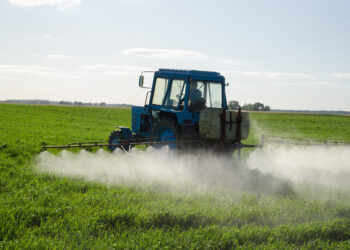
The prong of Bayer’s mitigation strategy that is most concerning for eco-agriculture is its work to “engage with policymakers for clarity” using industry and grower organizations as front groups. “Farmers rely on Roundup, a critical tool they have used for 50 years and has consistently been found to be safe by independent regulatory bodies worldwide,” Bayer says on its website. “Without additional legislative certainty, the efforts of the litigation industry threaten to drive up food costs.”
Since Bayer removed glyphosate from its residential Roundup formulation, its only market for the chemical now is in agriculture. So assuring farmers that glyphosate is safe and that the NHL cases among glyphosate users are purely coincidental is essential for the company to maintain its market. After all, what good would it do to win the legal battles and suddenly have no market for glyphosate because farmers chose to stop using it?
Never mind that “multiple studies have found a range of harmful effects from glyphosate exposure.” As long as Bayer can convince farmers that glyphosate is safe and essential for feeding the world and preventing soil erosion, the company can still sell lots of Roundup. And now it won’t be liable even if (or when) users develop cancer.
Despite the $7.25 billion price tag, this is definitely a win-win deal for Bayer.