

If you are working on something you can finish in your lifetime, you are not thinking big enough. – Wes Jackson
One of the oddities of professional life is that doctors and veterinarians are not taught much about nutrition. Of course, we all know that if people and animals ate better, we would need far fewer drugs, surgeries, doctors, and veterinarians.
That is why, even though crop farming is not my field, I am an “animal health guy”, I want to help promote a “new” grain that promises to be better for digestion, better for farmers, and, perhaps best of all, better for soil fertility and regeneration.
It is a perennial wheat plant called Kernza.
A Different Kind of Wheat
This is especially important now because the planet is getting hotter and, therefore, drier. This means increasingly serious storms, floods, and other forms of climate-related chaos. Irrigation is also draining our once-abundant ancient aquifers.
This takes a much larger toll on fragile annual crops, which are less tolerant of drought and heat than perennials because they have much smaller root systems.
Kernza is a perennial wheat plant. This goes against much of what I grew up with in a wheat-farming family in southwestern Kansas, where wheat is king.
My German ancestors knew exactly how to grow winter wheat, a type of wheat well suited to arid land. Technically classified as an annual, winter wheat is close to a two-year crop, giving it more time to develop a better root structure.
It is planted in late summer or early fall, grows lush green wheat grass throughout the winter, can be grazed by cattle, and then heads out and is harvested in late spring or early summer. Afterward, the ground is tilled, the next crop is planted, and the cycle begins again.
This is how wheat has been grown for more than a hundred years by my family and by many other families in our area.
Growing Up on a Wheat Farm
Growing up, I was too young for the threshing bees—the big community events centered around a monstrous threshing machine where everyone on the farm had a job.
I was also too young to see the ancestral method of shocking wheat in the field, although I have seen it done when visiting the area of Germany where my family came from.
The shocks were tall, towering four to five feet, and the wheat stood tall in the field as well. As a kid, we could easily hide in a mature wheat field.
Back then, our wheat was very susceptible to rust and other diseases, and it could blow down in a strong wind—think Kansas.
Before the advent of nomadic custom-cutter combine crews, harvest time was always extremely stressful for our family. The art was to be patient and let the wheat get dry enough to combine, but then cut it before a tornado or massive rainfall came along and ruined the crop.
With only one old combine, it could take up to a week of 16-hour days to get all our wheat cut and hauled to town.
Norman Borlaug and the Green Revolution
Then Norman Borlaug came along.
Borlaug was a University of Minnesota-trained plant geneticist who, after earning three degrees from the university, helped reinvent wheat farming. Among his many innovations, he developed high-yielding wheat varieties with significantly larger heads than typical varieties at the time.
He became known as the Father of the Green Revolution, and his agricultural technology was credited with dramatically increasing food production around the world.
Borlaug bred wheat plants to become much shorter, with thicker stems capable of supporting their large heads of grain. These dwarf varieties helped dramatically increase wheat production in Africa, India, and other parts of the world.
There was a downside, however.
One concern raised in this article is the concentration and reconfiguration of gluten in modern wheat. As someone from a wheat-farming family, I find the issue particularly ironic.
While I am fortunate not to suffer from celiac disease, I have come to question whether modern hybrid wheat may contribute to some of the chronic health issues I occasionally experience.
The Modern Wheat Debate
There are several books discussing the relationship between modern wheat, gluten, and health. Two frequently cited examples are Wheat Belly by Dr. William Davis and Grain Brain by Dr. David Perlmutter.
These books argue that modern wheat and gluten may contribute to a variety of health problems, including digestive issues, metabolic disorders, cardiovascular disease, and neurological conditions.
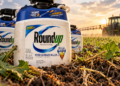
The broader issue is complicated further by the widespread practice of using glyphosate to desiccate wheat before harvest.
People often ask:
“How come I can eat wheat in Italy and other parts of Europe without getting a gut problem, but I can’t eat American-grown wheat?”
The differences between farming practices, wheat varieties, processing, and individual dietary responses make this a complicated question.
Enter Wes Jackson
This leads us to another individual who could be described as a genius, plant geneticist, and rebel: Dr. Wes Jackson of Kansas.
Jackson founded the Land Institute near Salina, Kansas, with his wife, Dana Jackson, in the 1970s.
His long-term goal has been to improve sustainable and regenerative agriculture, with a particular focus on breeding new perennial food crops.
These include small grains, pulses, and oilseeds—plants that could potentially help feed the world without destroying the land on which they are grown.
Jackson received the prestigious MacArthur “Genius” Grant for his plant-breeding work and has been a strong opponent of artificial genetic manipulation in agriculture.
His books include Towards a Sustainable Agriculture, Meeting the Expectations of the Land with Wendell Berry, New Roots for Agriculture, Consulting the Genius of the Place: An Ecological Approach to a New Agriculture, and Becoming Native to this Place.
The Rise of Kernza
Wes Jackson is closely associated with the development and advancement of Kernza, a perennial wheat crop.
He has also worked on several other perennial crops that could potentially change how we farm and produce food.
The word is spreading.
My hometown university in Minnesota has become a leader in advancing Kernza as a commercial crop. Today, Kernza can be found in a growing variety of products, including beer, bread, crackers, pizza, pastries, and cookies.
General Mills has also incorporated Kernza into some products, while Cascadian Farm sells seed to farmers interested in establishing commercial-sized plots.
There is another important economic consideration.
Conventional commodity crops such as corn and soybeans are largely price-taker commodities. Their prices are heavily influenced by agribusiness and global markets.
Unique, artisanal crops such as Kernza offer farmers the possibility of becoming more of a price-maker rather than a price-taker.
Why Kernza Matters for the Soil
The name “Kernza” is an amalgamation of the words “kernel” and “Kansas.”
One of the most important characteristics of Kernza is its deep and extensive root system. Its roots can reach twelve feet or more into the soil.
These extensive roots are associated with improvements in soil health.
Because Kernza is perennial, it requires considerably less tillage than annual crops. Less tillage can reduce soil erosion and support healthier soil microbiomes.
The article also highlights several environmental benefits attributed to Kernza, including:
- Reduced soil erosion
- Carbon sequestration
- Reduced nitrogen leaching
- Support for pollinators
- Habitat benefits for birds and small mammals
- A deep root system capable of accessing nutrients and water deeper in the soil
Another important distinction is that Kernza does not need to be desiccated with glyphosate before harvest in the same way as annual wheat. Doing so would kill the perennial plant.
Kernza in the Kitchen
My wife has been a commercial baker and pastry chef. Over the years, she has catered and provided food for regenerative farming meetings and sustainable agriculture groups.
She has worked with many alternative wheat varieties, including spelt, Kamut, einkorn, and durum.
Before discovering Kernza, her best results came from heirloom, non-GMO, non-sprayed, local wheat. She would soak it overnight or sprout it, then dehydrate and grind it.
That is a lot of work before any actual baking begins, but the results are delicious and easy on the gut.
She now makes two of her signature treats—shortbread and crackers—with Kernza, and we love the results.
Her Kernza scones are also included with this article.
Kernza flour is described as being higher in protein and other micronutrients than regular wheat flour. It can also be mixed with regular flour at approximately 10–50 percent of the total flour mixture.
Kernza Has Challenges, Too
Like everything, Kernza has some potential downsides.
The biggest one is yield.
Kernza currently produces only about 30–35 percent as many bushels per acre as regular wheat. This means farmers may need to plant more acreage to maintain a comparable income.
But the story is not over.
Scientists, geneticists, and researchers at the Land Institute continue to conduct research aimed at improving the seed and crop performance.
For consumers, Kernza is currently more expensive than conventional wheat and can be difficult to find.
The Land Institute provides sources for planting seed and flour. We currently get our Kernza flour from Joia Food & Fiber Farm in Charles City, Iowa.
Perhaps someday Kernza will become widely available through more retailers and agricultural suppliers.
Looking Ahead
Kernza represents a different way of thinking about grain production.
Instead of planting, harvesting, tilling, and replanting every year, perennial crops remain in the ground and continue growing year after year.
That fundamental difference has implications for farmers, soil health, water use, erosion, biodiversity, and the long-term sustainability of agriculture.
Kernza is still a developing crop, and it has challenges that need to be addressed—particularly its lower yield, higher consumer cost, and limited availability.
But the continued work of researchers and farmers suggests that perennial grains deserve attention as we consider what agriculture might look like in the future.
“If you are working on something you can finish in your lifetime, you are not thinking big enough.”
— Wes Jackson
Will Winter, DVM, is a retired veterinarian, holistic herd health consultant, and livestock nutritionist based in Minnesota. He is also a traveling lecturer and teacher focusing on sustainable livestock production and traditional nutrition. He provides consultations, workshops, lectures, and access to sources of natural livestock supplies for farmers and ranchers.