

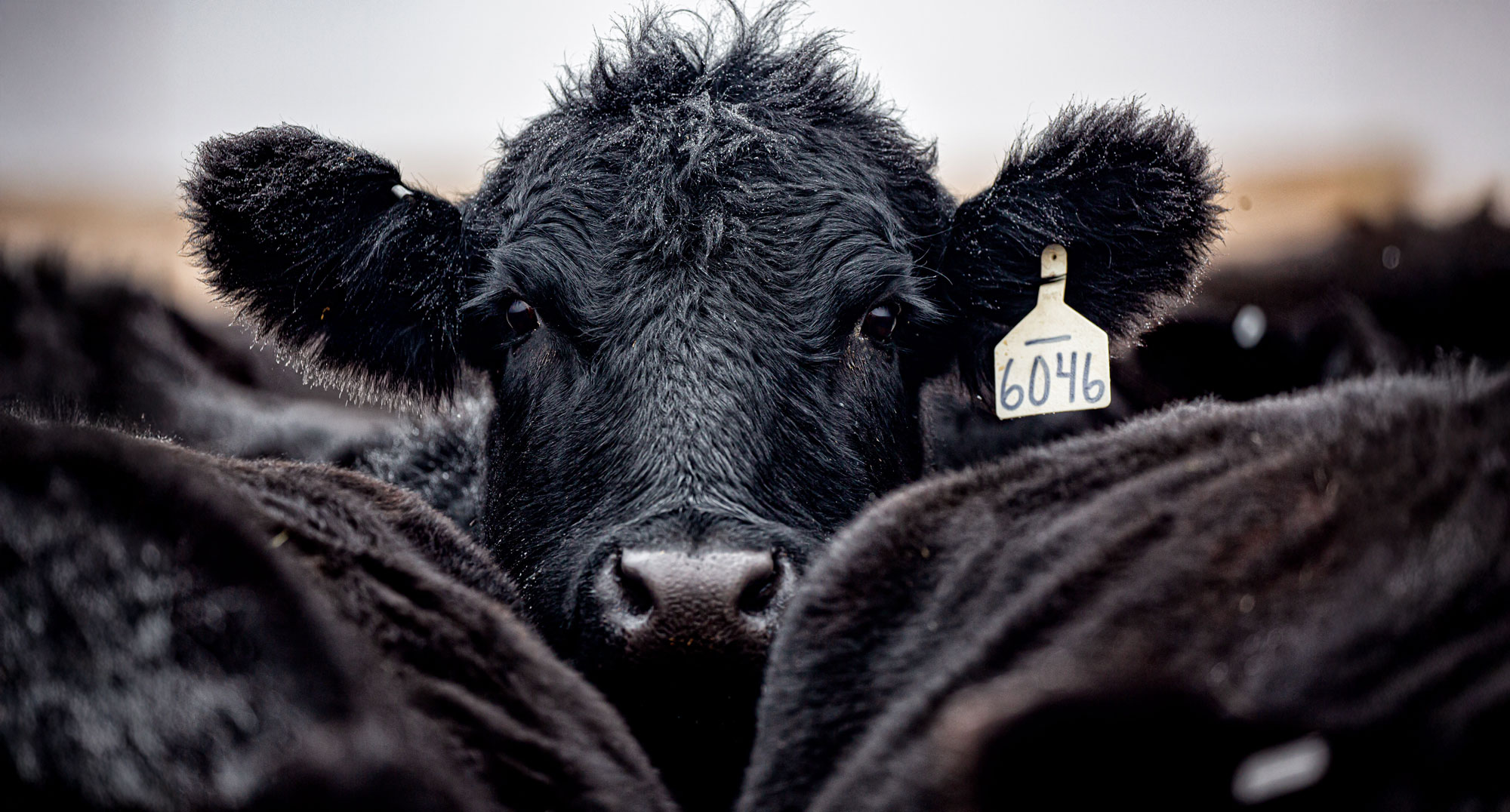

Nearly one in five steers in a large commercial study was lactating; could hormonal growth implants be the reason?
There are things you see after enough years around livestock that tell you immediately when something falls outside normal biology. A cow developing an udder before calving is normal. A dairy cow producing milk is normal. A heifer beginning to bag up because she is preparing to have her first calf is normal.
A castrated male producing milk is not.
Until a few days ago, I had never seriously contemplated that last possibility. I have raised cattle for years. I milk cows. I raise grassfed beef. I have never had a steer lactate, and I had never heard the cattle producers around me discussing lactating steers as something routinely encountered in beef production.
Then I went to North Dakota. I had spoken at the Theodore Roosevelt Presidential Library and was standing near a row of rocking chairs with a group of people, watching the sun set over the Badlands. A man who had heard me speak struck up a conversation about cattle. Somewhere in that conversation, he mentioned almost casually that a surprising percentage of steers were lactating when they reached slaughter.
I thought he had to be mistaken. He said the number was close to 20 percent. That sounded so biologically bizarre that I assumed there must be some misunderstanding. Then he pulled out a photograph of a research poster he had encountered at a food conference and texted it to me.
I sent the image to a text thread populated by people who know cattle and agriculture. The responses came quickly. Astonishment. Concern. Disbelief. I sent it to my father and stepmother, who operate a small dairy in Idaho. My father didn’t believe it. My stepmother’s response was simpler: “That’s crazy.” I agreed.
But instead of going to bed that night, I went back to my hotel and started researching. By chance, someone had told me something about cattle that contradicted my entire experience raising them, and I could not think about anything else.
The Research Was Real
Researchers from West Texas A&M University, along with a researcher from Cargill, evaluated 20,481 finished cattle from 33 feedlots. The title itself should get the attention of anyone who raises livestock: “Outcomes of Unintended Consequences: Frequency of Lactation and Intact Males and Their Impact in Finished Cattle.” Of the cattle evaluated, 6,078 were lactating. The researchers divided them between native beef cattle and dairy crosses, and between heifers and steers. Among native heifers, 28.77 percent were lactating. Among dairy-cross heifers, it was 55.81 percent. Those numbers alone deserve attention. Heifers have not yet calved. Lactation in an animal that has never gone through parturition is not what we normally expect to encounter.
But the steer numbers are what sent me down the rabbit hole. Lactation was observed in 14.55 percent of native steers and 19.66 percent of dairy-cross steers. These were castrated males (with four exceptions: the poster notes four lactating intact males among the male cattle evaluated). And the researchers weren’t simply describing loose tissue or an unusually developed mammary gland. Milk samples were collected from a subset of animals and analyzed. They contained measurable fat, protein and lactose.
For those of us who raise cattle outside the conventional feedlot model, I think these findings deserve more than a shrug.
Why Would a Steer Lactate?
I do not use hormonal growth implants in my cattle. Our beef animals are grassfed. Our dairy cows receive some grain, so I am not arguing that grain itself separates my animals from every animal in this study. But I have never seen a steer lactate. I have never encountered spontaneous lactation in a heifer that was not preparing to calve.
I started calling people who might have seen what I hadn’t. I spoke with my friend A.J. Richards of From the Farm, who used to run a slaughterhouse floor. I asked the people who slaughter my cattle at our USDA-inspected facility. I also spoke with someone at a small custom slaughter operation. None of them could remember seeing a steer lactate.
That is still anecdotal, and there is an important limitation. These are small processors, generally slaughtering fewer than 35 head a week. They aren’t seeing tens of thousands of cattle coming out of large commercial feedlots. Their cattle tend to come from 4-H kids, family ranches, regenerative producers and small family farms.
But that difference in cattle populations is precisely what makes their experience interesting to me. If lactating steers are simply a normal phenomenon across cattle production, you would expect people who have spent years slaughtering cattle to have encountered it at least occasionally. Maybe they did and weren’t looking for it. Or maybe the cattle coming through these smaller, more diversified production systems really are different. That isn’t a control group. It isn’t proof. But it is one more reason I want someone to do the comparison.
My immediate suspicion was hormonal growth implants. That is still my suspicion. But suspicion is not evidence, and I don’t want to replace one kind of agricultural dogma with another. If implants are responsible, I want research demonstrating it. If they aren’t, I want to know what is.
What makes the implant question difficult to ignore is how ubiquitous the practice is. USDA survey data from a 2011 feedlot study found that roughly 90 percent of feedlot steers and heifers received at least one growth-promoting implant between feedlot placement and marketing. That doesn’t establish the implant history of the 20,481 cattle in this particular study. The researchers did not publish an implanted-versus-unimplanted comparison. Still, if these 33 feedlots broadly resembled the conventional feedlot industry, we would expect the majority of the animals to have been implanted.
What exactly are we implanting? Commercial growth-promoting implants can use compounds including estradiol, zeranol, and trenbolone acetate. Different products and production stages involve different combinations, doses and release periods. The implant is generally placed beneath the skin of the ear, a tissue that does not become part of the food supply. But the contents don’t remain biologically confined to an ear — that would defeat the purpose. The compounds are released systemically and alter endocrine signaling to increase growth, improve feed conversion and promote lean-tissue deposition. Implant research has documented changes in circulating hormones and growth mediators, including IGF-1. Controlled research has also shown increased circulating estradiol and trenbolone metabolites in implanted steers compared with unimplanted controls.
These products work. Farmers adopted them because there is an economic advantage to getting more gain from the same feed and shortening the path to a finished animal. Any fair discussion of implants should acknowledge that benefit.
But physiology doesn’t stop at the measurements on a closeout sheet.
We Already Know Hormones Can Turn on the Mammary Gland
The next thing I discovered was even more interesting. Inducing lactation in cattle that have not gone through a pregnancy is not some theoretical biological possibility. Scientists have done it intentionally for decades.
Research going back at least to the 1970s used hormonal protocols involving estradiol and progesterone to induce mammary development and lactation in nonpregnant cattle. Subsequent researchers induced lactation in heifers that had never calved.
The protocols used for artificial induction of lactation are not the same as conventional beef implant programs. I want to emphasize that because similarity is not causation. But neither are these completely unrelated biological worlds. Estradiol, for example, is involved in experimental lactation-induction protocols and is also used in approved growth-promoting cattle implants.
Then there is a particularly relevant 1991 controlled experiment. Researchers examined mammary development in beef heifers treated with estradiol, trenbolone acetate, zeranol and combinations of these compounds. They included untreated controls. Some of the estrogenic treatments produced measurable mammary changes, including increased teat development.
So we have several separate facts. We know hormones can induce lactation without pregnancy. We know growth-promoting implants deliberately manipulate endocrine pathways. We know some compounds used for growth promotion can affect mammary development. And now we have a large commercial survey finding lactation in substantial numbers of finished heifers and, much more remarkably, steers.
What we do not have is the line connecting those dots. That is precisely the research I want.
Maybe It Isn’t the Implants
The researchers themselves point toward another possibility. Their poster discusses excess adiposity and the ability of fat tissue to contribute to estrogen production, raising the possibility that this could be associated with galactorrhea.
This deserves investigation too. Perhaps the endocrine environment created by extreme finishing condition is sufficient to produce this phenomenon. Perhaps dairy genetics make animals more susceptible, which could help explain why dairy-cross steers had higher lactation rates than native steers. Perhaps high-energy diets interact with adiposity. Perhaps implants interact with all of the above.
If excessive adiposity alone is responsible, however, I don’t find that answer entirely reassuring. It would mean that we have pushed the physiology of finished cattle far enough through another mechanism that a meaningful percentage of castrated males are lactating. Either way, the cattle appear to be telling us something.
This is where I think farmers practicing organic and regenerative agriculture should pay particular attention. Modern agriculture is extraordinarily good at measuring efficiency. We measure average daily gain, feed conversion, days on feed, carcass weight, yield grade and dollars per head. If an animal reaches market weight sooner using less feed, our conventional accounting system records an improvement.
But biology contains outcomes that don’t necessarily appear in those columns. A steer can hit the desired carcass weight, the feed conversion can look excellent, the economics can work, and … the steer can be producing milk. Perhaps that has no meaningful consequence beyond being biologically peculiar. But shouldn’t we establish that rather than assume it?
Human beings also live amid an increasingly complex collection of endocrine-active substances. Researchers study endocrine disruption associated with plastics, industrial chemicals, water contaminants and other environmental exposures. That does not mean the same mechanism is operating in cattle and people. But agriculture is part of our environment, and food is one of the most intimate connections between the environment and the human body.
I think curiosity is warranted.
Where Are the Control Cattle?
Organic and regenerative agriculture may be uniquely positioned to help answer this question because we already have the comparison population. There are cattle all over this country that have never received steroidal growth implants. Let’s study them.
Take conventionally finished implanted steers and verified never-implanted steers. Ideally include both grain-finished and forage-finished animals so diet doesn’t become an uncontrolled variable. Separate native beef genetics from dairy crosses. Record body condition, age, days on feed, implant product, dose and reimplant history. Then determine many are actually lactating.
Measure circulating estradiol, progesterone, prolactin, trenbolone metabolites and other relevant endocrine markers. Examine mammary tissue. Analyze the secretion. Compare adiposity. Follow the animals through processing.
If never-implanted steers lactate at the same rate, those of us suspicious of implants need to accept the result and look elsewhere. But if the difference is dramatic, conventional agriculture needs to accept that result too.
What surprises me almost as much as the finding itself is how little conversation I can find surrounding it. I came across this information by accident. Someone happened to approach me after a speaking engagement and happened to have photographed a research poster. I raise cattle. I write about agriculture. I spend an unreasonable amount of time talking to farmers, yet I had never heard of this.
The researchers haven’t hidden their work. They presented it publicly. But making information technically available is not the same thing as having an agricultural conversation about what it means. Where is that conversation?
Our Difference Needs to Mean Something
There is also a lesson here for organic and regenerative producers about how we communicate with consumers.
Consumers see “no added hormones” and often have little idea what that actually means. It becomes one more claim competing for attention beside grassfed, organic, natural, regenerative, antibiotic-free and every other word printed on a package. We need to explain what we actually do differently. If your cattle never receive steroidal growth implants, say so and explain what that means. We are choosing not to administer compounds such as estradiol or trenbolone acetate to accelerate growth. We are choosing genetics, forage, management and time instead.
We should not claim that this proves our beef is healthier unless we have evidence demonstrating the health outcome. We don’t need to exaggerate. The truth is interesting enough.
And consumers cannot meaningfully choose among production systems unless our processing infrastructure preserves those distinctions. This is one more reason America needs more independent processors, more regional slaughter capacity, more direct marketing and more transparent supply chains.
When nearly everything disappears into a highly consolidated commodity system, the story of how an animal was raised becomes remarkably easy to erase.
An Invitation to Investigate
If a technology or production system coincides with a biological outcome we did not intend, shouldn’t we understand the outcome before declaring the system an unquestioned success?
Farmers have always been observers before we were scientists. We notice when conception rates change. We notice when calves aren’t thriving. We notice when a pasture responds differently after rain. We notice when an animal’s behavior tells us something isn’t right.
An observation isn’t proof. It is an invitation to investigate. I still suspect hormonal implants are involved in the lactating steers. My experience with never-implanted cattle is part of why I suspect it. The experiences of the small processors I called add to my curiosity, and the endocrine literature gives me additional reason to ask the question.
But I don’t want my suspicion confirmed because it fits my worldview. I want it tested. Maybe the implant hypothesis will be wrong. Maybe adiposity will explain it. Maybe genetics will. Maybe researchers will discover an interaction nobody has considered yet.
Whatever the answer, I want agriculture to be curious enough to find it, because 14 to 19 percent of steers lactating is not something I am willing to look at and simply call normal. A castrated male producing milk is a biological signal.
Those of us who claim to farm with biology rather than against it should be among the first people willing to pay attention.
Research Links:
1. PRIMARY STUDY — 2025 Plains Nutrition Council / West Texas A&M / Cargill
Outcomes of Unintended Consequences: Frequency of Lactation and Intact Males and Their Impact in Finished Cattle. The poster proceedings containing the 20,481-cattle study.
2. Moran et al., Journal of Animal Science, 1991
The effect of estradiol, trenbolone acetate, or zeranol on growth rate, mammary development, carcass traits, and plasma estradiol concentrations of beef heifers.
https://academic.oup.com/jas/article/69/11/4249/4654432
3. Moran et al., PubMed record
PubMed record for the 1991 beef-heifer mammary-development study.
https://pubmed.ncbi.nlm.nih.gov/1752801
4. Fulkerson & McDowell — induced lactation, 1975
Artificial induction of lactation in cattle using hormonal treatment in nulliparous heifers.
https://pubmed.ncbi.nlm.nih.gov/1167131
5. Peel et al. — induced lactation, 1979
Research involving estrogen and progesterone in artificial induction of lactation.
https://pubmed.ncbi.nlm.nih.gov/496742
6. Jordan et al. — artificial induction of lactation, 1981
Hormonal induction of lactation in nonpregnant Holsteins, with endocrine measurements.
https://pubmed.ncbi.nlm.nih.gov/16725644
7. Sawyer et al., Journal of Dairy Science, 1986
Hormonal induction of mammary development and lactogenesis in heifers.
https://www.journalofdairyscience.org/article/S0022-0302(86)80570-7/fulltext
8. Induced Lactation in Prepubertal Holstein Heifers
Study of induced mammary secretion/lactation in prepubertal Holstein heifers.
https://www.researchgate.net/publication/12224315_Induced_Lactation_in_Prepubertal_Holstein_Heifers
9. Induced lactation in pubertal heifers — Journal of Dairy Science, 2011
Study using estradiol-17β and progesterone to induce lactation in pubertal Holstein heifers.
https://www.journalofdairyscience.org/article/S0022-0302(11)00090-7/fulltext
10. Implanted vs. nonimplanted finishing steers — endocrine effects
Controlled research examining coated steroidal implants and circulating estradiol, IGF-I and trenbolone in finishing steers.
https://pmc.ncbi.nlm.nih.gov/articles/PMC6140838
11. Feedlot implant/reimplant study
Large feedlot study of Revalor-XS and reimplant programs.
https://pmc.ncbi.nlm.nih.gov/articles/PMC8104739
12. Aggressive implant strategies in feedlot steers
Research examining increasingly aggressive implant strategies in finishing steers.
https://www.sciencedirect.com/science/article/pii/S1080744618301153
13. USDA APHIS — feedlot implant practices
USDA report stating that about 90 percent of feedlot heifers and steers were implanted at least once for growth promotion.
https://www.aphis.usda.gov/sites/default/files/Feed11_is_Implant_1.pdf
14. FDA — Steroid Hormone Implants Used for Growth in Food-Producing Animals
FDA overview of steroid hormone implants, including estradiol, progesterone, testosterone, trenbolone acetate and zeranol.
15. FDA — currently approved and marketed beef cattle implants
FDA list of currently approved/marketed implants and their target cattle classes.
16. Oklahoma State Extension — Implants and Their Use in Beef Cattle Production
Technical overview of implant classes, compounds, products, doses and use.
https://extension.okstate.edu/fact-sheets/implants-and-their-use-in-beef-cattle-production.html
17. DailyMed — Revalor-XS official label
Official drug label: 200 mg trenbolone acetate plus 40 mg estradiol per dose.
https://dailymed.nlm.nih.gov/dailymed/drugInfo.cfm?setid=2741349c-8a48-4d09-b74c-d92d35f0593d