

Cacti Fungal Endophytes May Help Cacao Tolerate Drought
Beans of the cacao plant, Theobroma cacao, are used in chocolates, pharmaceuticals and other products, but they’re under threat. Increased drought has already begun to stress cacao-growing regions of Colombia and other countries, and models predict it will get worse. In recent research, though, scientists have found that fungal endophytes — microbes that live in a host plant without causing harm — may help boost drought tolerance in cacao.

In a study published in mSphere, mycologists added fungal endophytes from a species of cactus to the soil of growing cacao plants. They found that the inoculated plants showed less negative levels of leaf water potential, possibly due to better control of the stomatal conductance, which is a key determinant of photosynthesis. These alterations could help the plant retain more water as it grows.
The researchers’ lab had previously found endophytes that could improve the growth of potatoes. For the new work, they collected root samples in two locations in Colombia from 12 Stenocereus cacti, a tree-like genus characterized by its ability to thrive in arid, hot conditions. They isolated more than 20 fungal endophytes from the samples and subjected the fungi to drought conditions. Five of the isolates lost less than 20 percent of their total biomass. The researchers added these isolates to soil of growing cacao plants and compared them to cacao plants growing in ordinary soil, then subjected both to drought conditions.
The endophytes did not affect the height of the plants, but treated cacao plants developed more and larger leaves. In addition, plants inoculated with endophytes were better able to recover from the drought conditions. Endophytes from the genera Fusarium and Phoma also promoted plant growth under non-drought conditions.
The scientists don’t know exactly why the endophytes help cacao with drought resistance. However, their analyses and observations suggest that the endophytes help the cacao plant manage the stomata — tiny pores that open and close to allow gas exchange, to avoid the rapid release of water vapor.
They suspect the endophytes may also confer similar benefits to other crops and are developing an endophyte-based soil additive that farmers could use to help their crops better survive drought in Colombia and beyond.
Light Functions as both Gas and Brakes for Plants

Light plays a major role in how plants grow, but scientists are still uncovering exactly how it works. Researchers at Osaka Metropolitan University have now identified a previously unknown mechanism that helps explain how light influences plant development. The findings were published in Physiologia Plantarum.
The research team focused on young pea stems and used a specialized technique to measure how strongly the epidermal (outermost) plant layer is attached to the inner tissues. Their results showed a clear difference depending on light exposure: plants grown in light had much stronger adhesion between these layers than those grown in darkness.

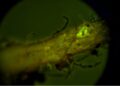
To understand what was causing this stronger connection, the researchers examined the plant cells using a fluorescence microscope. They observed that stems exposed to light emitted signals linked to higher levels of a compound called p-coumaric acid. This phenolic acid is known to help reinforce plant cell walls. Its presence suggests that light exposure increases the production of this compound, which in turn strengthens the structural bonds within the plant.
The findings reveal an interesting tradeoff. While stronger adhesion makes the plant more structurally stable, it also reduces its ability to grow. When the outer and inner tissues are tightly bound, the inner tissues cannot expand as easily. This limits overall stem growth, meaning that light not only supports plant development but can also slow it under certain conditions.
The researchers believe this mechanism could be part of a broader pattern in plant biology. By continuing to study how adhesion changes as plants respond to different conditions, they hope to determine whether this is a universal way plants regulate growth.
Socal Honeybees Can Fend Off Deadly Mites
While commercial honeybee hives nationwide are collapsing under attack from deadly parasites, a unique hybrid bee found only in Southern California has demonstrated the ability to survive.
U.S. beekeepers reported losing up to 62 of their managed honeybee colonies in 2025. The losses are driven by a combination of pesticides, climate pressure, habitat loss, and parasites, with the Varroa mite among the most destructive of these factors. Varroa mites feed on honeybees’ fat body tissue, which weakens their immune systems, reduces their body weight, and shortens their lives. The fat body is an organ in bees that performs similar functions as the liver, pancreas, and immune system in the human body. The mites also act as vectors for deadly viruses like Deformed Wing Virus and Acute Bee Paralysis Virus, which they transmit directly into a bee’s bloodstream. Beekeepers rely on chemical treatments for suppression that can lose effectiveness over time.
A new study from UC Riverside, published in Scientific Reports, is the first to show that a locally adapted population of honeybees can naturally and consistently suppress the mites. The researchers monitored 236 honeybee colonies between 2019 and 2022. The Californian bees were not entirely immune to the mites. However, colonies headed by locally raised Californian hybrid honeybee queens had about 68 percent fewer mites on average than colonies headed by commercial honeybee queens. They were also more than five times less likely to cross the threshold at which chemical treatments become necessary.
The bees in the study are not a commercial breed. They come from a genetically mixed population of honeybees established in Southern California, often from feral colonies living in trees. Recent research shows they are a hybrid population with ancestry from at least four honeybee lineages, including African, Eastern European, Middle Eastern, and Western European bees.
To more fully understand the bees’ resistance to the mites, the researchers also ran laboratory experiments with developing honeybee larvae. Varroa mites must enter brood cells to reproduce, so the team tested whether mites were equally drawn to larvae from commercial and Californian hybrid honeybee colonies. They were not. Mites were less attracted to the Californian hybrid honeybee larvae, especially at seven days old, the stage when mites are normally most likely to invade. The finding suggests the bees’ secret to fending off mites lies in early development, before any adult worker behaviors might come into play.
Next, the team plans to investigate the genetic, behavioral, and chemical signals that may make the larvae less attractive to mites.

| Voluntary “Product of USA” Label Finally Means What It Says When you walk into the grocery store and pick up a banana, a bag of peanuts, or a package of chicken, the label tells you where it originated. USDA’s mandatory country of origin labeling (COOL) requires that all fruits and vegetables and certain other products — peanuts, pecans, macadamia nuts, ginseng, fish, shellfish, lamb, goat, and chicken — list the country of origin on the label. But beef and pork have been exempt from the COOL mandate. A package of ground beef doesn’t have to tell you where it’s from. Worse, up through last December, that beef could legally have said “Product of USA” when, in fact, it was simply packaged in the U.S. while the animal was born, raised, and slaughtered elsewhere. It wasn’t always that way. Starting in 2009, mandatory country of origin labeling (MCOOL) applied to beef and chicken. Then, in 2015, the World Trade Organization ruled that MCOOL discriminated against Canadian and Mexican beef and pork producers, and beef and pork were exempted from MCOOL. After that, processors exploited a legal loophole to label beef that originated elsewhere as “Product of USA,” confusing consumers. Now, after six years of pressure from groups like Farm Action, the USDA is finally enforcing a voluntary “Product of USA” label for beef and pork. Under the new guidelines, a package of meat can’t say “Product of USA” unless the animal was born, raised, and slaughtered in the U.S. The USDA enforcement of the voluntary label went into effect on January 1. American producers of grass-fed beef have been the group most hurt by the labeling loophole. The United States both imports and exports large quantities of beef, but the exports are mostly grain-fattened beef, and the imports are mostly grass-fed. Feedlot beef is too fatty to make good hamburgers, so meat processing plants blend in trimmings from grass-fed cattle to get the proper fat-to-lean ratio. Under the old loophole, they could import grass-fed beef and still label the hamburger as “Product of USA.” With that loophole finally closed, packers who want to use the “Product of USA” label will have to source all of their beef from the U.S. Of course, unlabeled beef could still be from anywhere, which is why Farm Action is still pushing for MCOOL in beef and pork. But at least the voluntary label is a start toward more transparency in the meatpacking industry. Read ag news summaries like this — written by Acres U.S.A.’s Anneliese Abbott, with an eco-ag perspective — posted new every week at members.acresusa.com. |