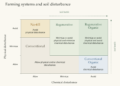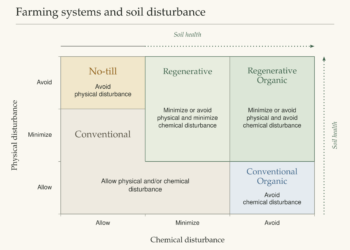

Farmers disagree about which farming styles are better or worse and how they affect soil health. I came to the realization that some of the arguments between regenerative and organic farmers lacked a common framework. I view them as natural allies in building soil health. These graphs are my way of thinking through that relationship.
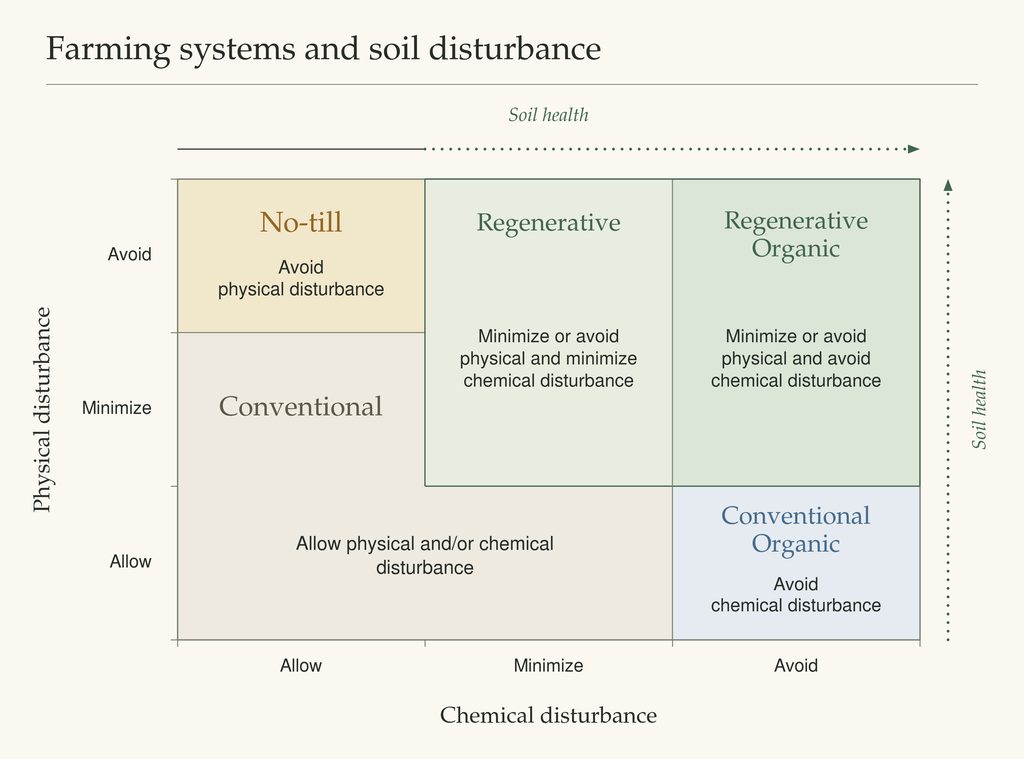
If you minimize chemical disturbance and eliminate physical disturbance, that can work. If you minimize physical disturbance and eliminate chemical disturbance, that can work. It’s not that an organic farmer has to give up tillage; tillage should be used as a last resort. It’s not that all no-till farmers should never use a chemical; chemicals should be used as a last resort. Neither should be a routine frontline practice. That makes the framework more practical and encourages people to get creative on their own farms in minimizing both kinds of disturbance.
One of the things I’ve learned in visiting farms around the world is that they are all different. Farmers are some of the most creative and clever people I’ve met. They work to manage their own little part of the planet and grow food in a way that works for them economically while giving people what they need and want. Empowering the creativity of farmers through the idea of minimizing those types of disturbance is a powerful way to put the choices in their hands. They are not being told how to farm; they are being asked to think about how to farm.